 1 month ago
42
1 month ago
42

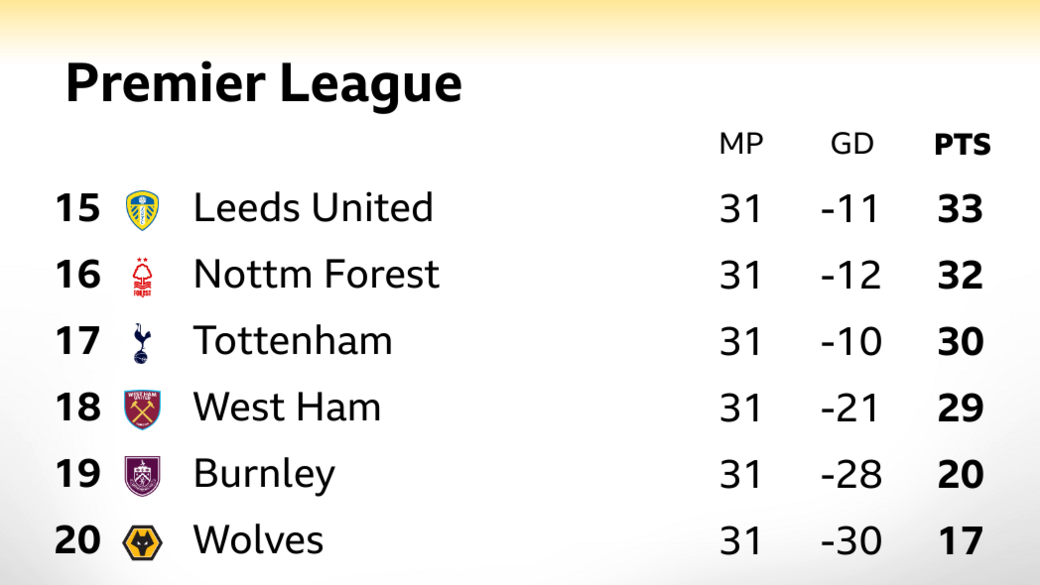
With the appointment of Roberto de Zerbi, Tottenham are on to their third manager this season and they are in serious relegation trouble. How, I ask, can a club with so much going for it end up in such a mess?
In the past few years, Spurs have developed a state-of-the art stadium and training facilities which are the match of anything across the globe.
Both are something I'm sure the club's hierarchy are extremely proud of but, with that in mind, I'd like to recall a quote from one of these islands' greatest football legends, Bill Shankly, who once asked if you had a choice of a great stadium and no team, or a poor stadium and a great team, which would you choose?
Bill followed it up by saying he'd have a poor stadium and a great team because the people come to see the team.
He's right, of course. Football is about the players and the game, not the surrounds.
From my perspective as a former manager, I know supporters just want to see their teams win, and they will prioritise performances over infrastructure all day long.
So, are Spurs' current problems simply down to them taking their eye off the ball in terms of what is happening on the pitch, and being too focused on what is happening off it?
Wwhile the club has invested heavily in the transfer market, it seems many of their supporters believe that they have always maintained a tight restraint on player wages - which I am sure has cost them when competing for signings with other top Premier League teams.
On top of that, behind the scenes they have not only moved on from long-serving executive Daniel Levy, who left in September after almost 25 years in the role, they have also consistently changed important roles in their management structure.
By doing that, I've got no doubt that the club has impinged on their coach's ability to construct and sustain a stable players' identity model, which could and would instil a much more aligned system on the pitch.
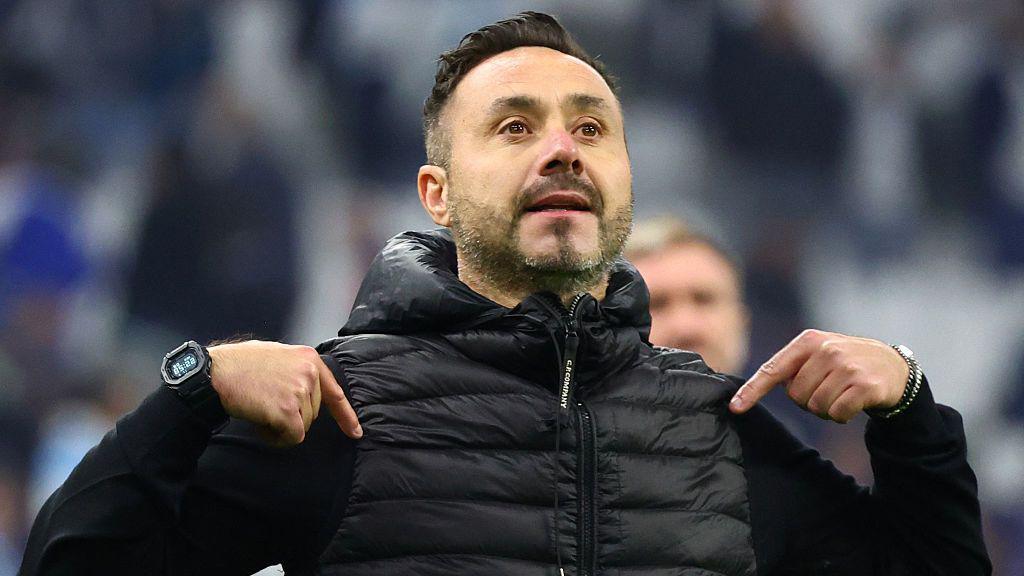 Image source, Getty Images
Roberto de Zerbi has taken over a Tottenham team who sit just one point above the Premier League relegation zone
As I've mentioned in previous columns, today's managers and coaches are more or less given players to coach rather than choosing signings themselves.
If you are the manager and you have real differences of opinion with the people making those decisions, or there are constant changes above you, then goodness knows how you can be successful, whoever you are.
With that in mind, and also looking at where Spurs have gone wrong with some of their player recruitment in recent years, I cannot believe that a manager of Roberto de Zerbi's standing would sign a five-year contract without him having some say on signings and the new players who will be coming into the club.
With Spurs maintaining a strict wage budget, their recruitment must be smart and resourceful whatever division they are in, but it is also important it is in line with the coach's needs and wishes.
First things first, though. How does De Zerbi try to keep them up?
'The Spurs players have to step up'
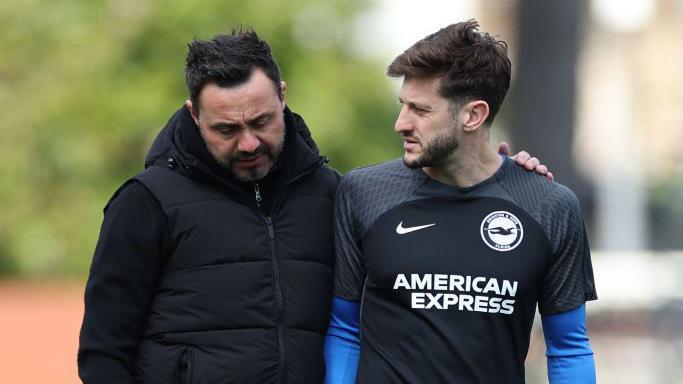 Image source, Getty Images
Lallana (right) played under De Zerbi at Brighton between 2022 and 2024
Spurs' players and coaches have come in for major criticism this season. De Zerbi has seven games left to turn things around and stave off relegation.
Earlier this week I spoke to Adam Lallana, who worked with De Zerbi when he was at Brighton, about his methods and what he is made of. The picture I was given was of someone who wants do things 100% his way.
He will not tolerate interference and will not stand for players who won't do what he wants them to. If they fall short, they will be out.
De Zerbi's identity as a coach is about free-flowing and forward-passing football, which fits Tottenham too - it is what their fans want - but without having strong characters and a bit of well-directed leadership on the pitch, that will not count when the going gets tough.
Wherever I managed, having that kind of character in my team was always hugely important to me. I felt a sound base like that within the team gave even limited players a chance of being successful by getting results over the course of a long and demanding season.
To find out the character of these players, I would go through numerous routes to make sure the lad I was going to sign indeed had the right credentials.
Watching them in away games was a must, for example. So was speaking to their former coaches or managers - and players who had played with them.
Off the field, I'd try to put a picture together too. Did they go out a lot? Were they married? The whole process would be as thorough as I could make it. I should add that it did not always go to plan!
But behind it all, I knew the system I wanted to play and getting the right fit, in terms of the identity of every player in that system, was imperative for us.
When you are going up against clubs who are bigger and, supposedly, better than you then those fine details were so important, but every team needs character and, too often this season, Spurs have lacked it.
While Tottenham's wage budget is lower than any of the Premier League's other 'big six', it's still much higher than Bournemouth, Brentford and Brighton - yet the difference between them is plain to see, on and off the pitch.
That has to change in the next few weeks. Spurs cannot sign anyone now to change things, so instead their players have to step up and show they have the ability to scrap it out and remain a Premier League side. If they are not up for the fight, they are going down.
How do clubs appoint managers anyway?
Around 40% of clubs in England's top four divisions of men's football have changed their manager this season, and one in four of those teams have made more than one change.
With those stats still so high, I am sure people outside the game must be wondering about the process of appointing a manager.
In my day, I never once put on a presentation in front of a chairman or board of directors as part of any interview process.
Usually it was your management record, and your relative success with the respective budgets you'd been given, that would seal the deal.
Today, that has all changed. Many managers and coaches, I'm told, pay to have these presentations professionally prepared for them.
Before you get to that stage, however, club owners and chairmen will rely on their sporting director and chief executive to compile a list of names.
As I've mentioned in previous columns about the lack of opportunities now for British managers, with so many foreign owners in our game, there are lots of foreign sporting directors too, so it is not surprising they appoint managers and coaches they know.
Also, the agents who have assisted the owners when they purchased the club, will often have a big say on who the sporting director is too.
Players will also flow into some clubs in a similar fashion, I'm sure, and I'm afraid all of this impinges on managers and coaches from this country, who are not part of that network.
Academy coaches from the top clubs are finding a way through the system, as I am sure their contacts with clubs' young players is part of their appeal.
It is definitely a route into management that is worth following but I am sure any ex-professionals who have followed it will have quickly been exposed to the key difference between managing at academy level and being in charge of a club's first team.
Unlike academy football, which is about development, first-team football is about winning.
Every week you will be judged on your result and, no matter what philosophy you employ, the fanbase and the people above you will react accordingly.
'Get everyone pulling together as one'
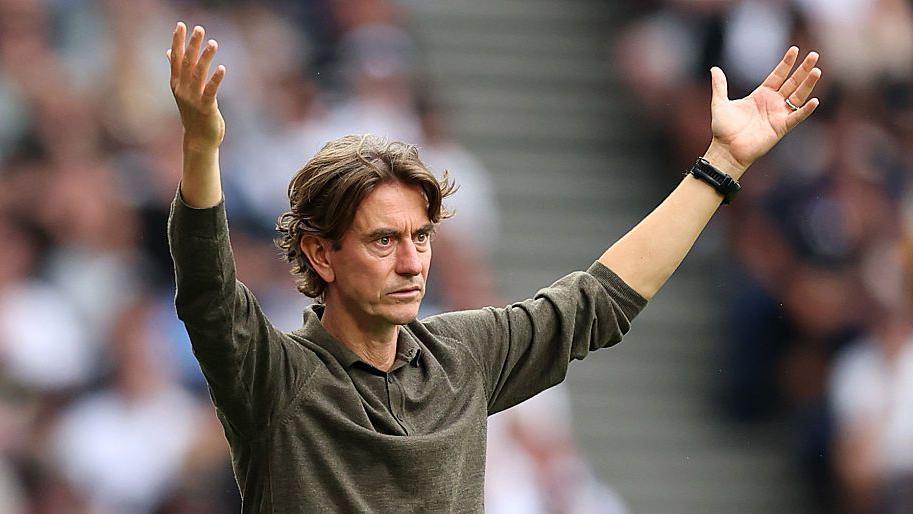 Image source, Getty Images
Thomas Frank spent seven years in charge of Brentford. He lasted less than eight months as Tottenham's head coach before being sacked in February
Any academy coaches entering the crazy world of club management will also grab the importance of the club's alignment, and how well every part works together.
That alignment is something else that appears to be lacking at Spurs. Thomas Frank had a wonderful seven-year spell in charge of Brentford, benefiting from the co-operation of a unified club.
The glue between the Brentford manager and the people above him remained when Frank left for Spurs last summer, leaving Keith Andrews an organisation that had a clear pathway, where everyone is involved in the journey through the season.
Whether it is recruitment, academy matters, medical issues or at first-team level, they are an example of a club that is united.
Brighton and Bournemouth are the same. They have both not only recruited players brilliantly in recent years, they have followed a plan that suits their own principles and fits the identity they want to establish.
To simplify it, it is a case of round pegs and round holes, but it is hardly rocket science anyway. Fill the spaces left by any players who have moved on, and make sure everyone at the club pulls together.
I was once told by a very senior manager at a top club that my biggest challenge at a team I had just taken over would be to get everyone pulling together as one. If I could manage that, he said, I would have a great chance of success.
That applies to every manager, but with the added layers of management today, doing it has become even tougher. It has to be the target for De Zerbi and Spurs too, whatever division they are in next season.
Tony Pulis was speaking to BBC Sport's Chris Bevan.