 1 month ago
48
1 month ago
48
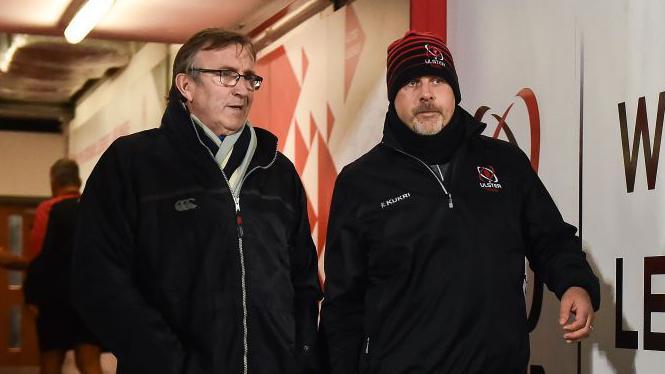 Image source, Getty Images
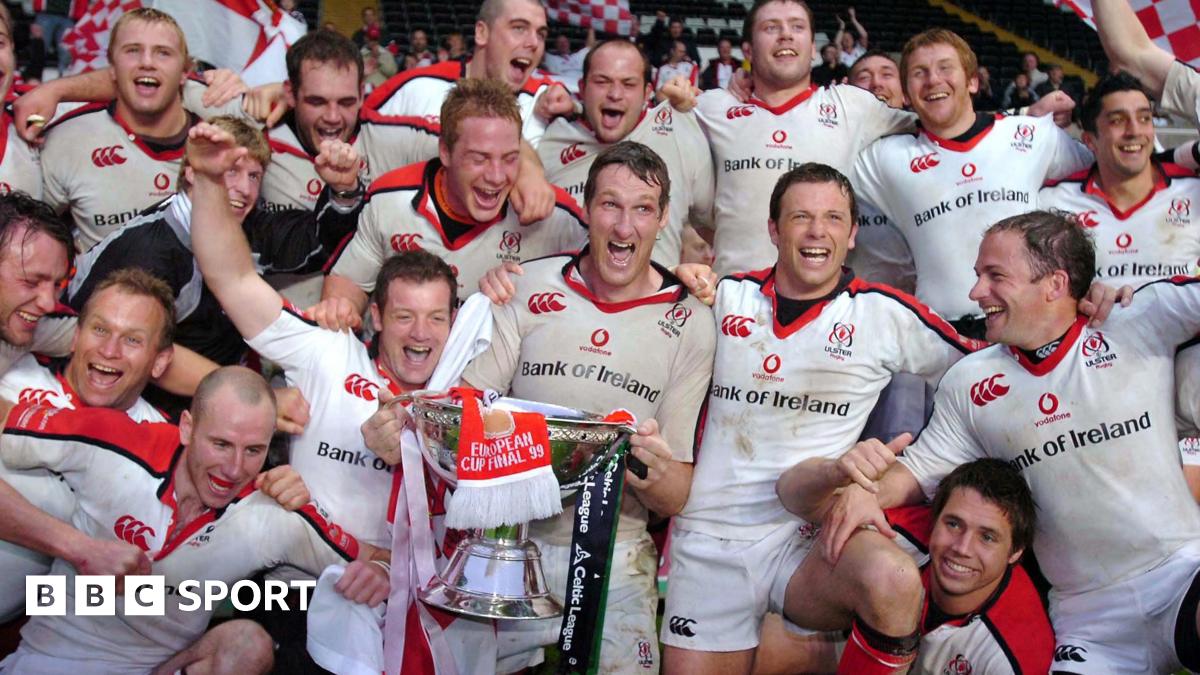
Irwin (left) became Ulster's team doctor at the end of his playing days which saw him represent the province as well as Ireland and the British and Irish Lions
ByDavid Mohan
BBC Sport NI journalist
Rugby, like all sports, is ever-evolving.
With the dawn of professionalism in 1995, the reach, profile and demands of the game have grown.
Some things never change and with a contact sport comes risk, yet concerns continue to grow regarding the issue of head injuries.
Advances have been made, with law changes aimed at reducing high challenges and Head Injury Assessment (HIA) protocols introduced by World Rugby, but the spotlight was shone on the issue further in a recent BBC documentary by former England star Ben Youngs.
Head injury in rugby is not new but it may have ramifications for sport as a whole with former British and Irish Lion David Irwin agreeing Youngs' documentary is making people "sit up and say that something needs to improve".
Irwin - a former Ireland international, Ulster player and 29-year doctor with the province - outlined the reason a group of former players including Mick Molloy, Trevor Ringland, Ciaran Fitzgerald and Keith Wood have come together with the aim of making rugby "a safer game to play".
"Changes in the game from the amateur to professional era and players becoming bigger, stronger and faster, have led to massive collisions and as a result, there are more players getting concussion-type injuries," Irwin told the Ireland Rugby Social podcast.
"It's not just straight concussion but sub-concussive injuries that can put you at risk of degenerative issues down the line like dementia processes."
Concussion Special: Does the game need to change?
While scoring tries remains the objective in rugby, how to do so has changed over the years, with multi-phase attacks, power up front and huge hits dominating, although not exclusively as flair helped France to the 2026 Six Nations title.
The introduction of the HIA assessment has "improved things dramatically over the past 15 or 20 years" but Irwin accepts it is not a perfect system.
So how do you further lower the risk?
Advances have helped lower the risk in scrums and line-outs but Irwin notes the trend of replacements being dominated by power forwards.
"At the moment there is a lack of space, especially in the professional game with defences so organised, so attacking ploys mean you have to go through multiple phases to create space for backs to run into and that leads to big collisions.
"Most of the tackles in the amateur game were side-on because someone was running through a gap but now there are no gaps and the option is to run on to one or two players head-on.
"The only way to try and reduce that ongoing risk of collisions is to try and change the way we play the game.
"It needs to pull back from where it is with this attritional, multi-phase game. Try to get back to a more fluid, off-loading game and push the tackle height down further."
Ringrose 'brave' to withdraw from Lions Test - Marshall
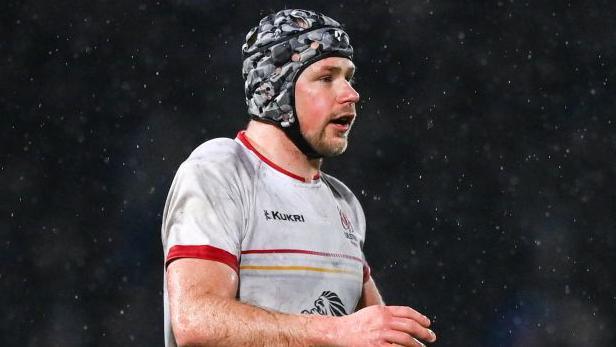 Image source, Getty Images
Former Ulster and Ireland player Luke Marshall says he suffered 15 concussions throughout his career
Former Ireland international Luke Marshall had his share of head injuries, counting 15 concussions throughout his career, but feels there have been huge strides made in terms of player welfare.
While the 34-year-old, who retired in 2024, feels rugby is "as safe as it's been", he maintains "there's still room for improvement".
In a sport where toughness is a prerequisite, there is a sense things have begun to turn with Ireland international Garry Ringrose opting to withdraw from the second British and Irish Lions Test against Australia last summer because of concussion symptoms.
"What Garry did was incredible as that was going to be his first Lions start, so if staying on the pitch is brave, that's another type or bravery," said Marshall.
"He felt comfortable to say he wasn't feeling right and for a guy of that profile to do that, it sets a great example."
Despite suffering head injuries in his career, Marshall insists there was "never pressure from medical staff or coaching staff but it was individual pressure" to play on when feeling out of sorts in a game.
"Sometimes you got a knock and say to yourself 'I'll just see how I feel for a while' and you get through to the end of the game, but it is tough because there is pride in the jersey and you don't want to let your team-mates down.
"The game is professional so you're playing for your livelihood as well."
At grassroots there is a problem - Hooks
While rugby at the highest level seems to be in rude health, former Ireland international Kenny Hooks - a member of the Irish group looking at improving the game - worries "at grassroots there is a problem".
A teacher by profession, Hooks coached Royal School, Armagh to the 2004 Ulster Schools' Cup and admits there are signs that fewer young people are sticking with the sport.
Risk of injury is a concern for some parents and this is an area he insists must be a priority but the dynamics of the game are also contributing as "in the past it was a game for all sizes but now you have to be huge".
"You look at kids in the school and some say you won't make it to senior level because you're not big enough - and that's a mistake.
"You should have a medical person at each match. If we don't do something to minimise the risks, the numbers could drop off.
"If we show we are taking care of the kids and there are proper medical facilities like we having in Armagh, where there are protocols and testing, people can take an objective decision about letting their kids play."