
Rich CiminiApr 19, 2026, 06:00 AM ET
- Rich Cimini is a staff writer who covers the New York Jets and the NFL at ESPN. Rich has covered the Jets for over 30 years, joining ESPN in 2010. Rich also hosts the Flight Deck podcast. He previously was a beat writer for the New York Daily News and is a graduate of Syracuse University.
FLORHAM PARK, N.J. -- Thirty-five years ago, Jimmy Johnson was in the same position as the New York Jets right now: He was sitting on a gold mine of draft picks, hoping to reinvent a losing roster.
"If they use the picks wisely," the Hall of Fame coach told ESPN last week, "this could give them a foundation for years to come."
Johnson used the windfall from the celebrated Herschel Walker trade in 1989 to build the foundation of the Dallas Cowboys' dynasty in the 1990s. In the 1990 and 1991 drafts, the Cowboys made eight combined draft picks in the first and second rounds. Since then, only six teams have selected that many first- and second-round picks in consecutive drafts, according to ESPN Research.
The Jets could be the seventh.
While neither was as monumental as the Walker blockbuster, the Sauce Gardner and Quinnen Williams trades last November set up the Jets for potential franchise-altering drafts in 2026 and 2027. In terms of capital, those two players brought back three first-round picks and one second-rounder.
Current tally: The Jets have eight choices in the first two rounds of the next two drafts -- the first team in five years to be that top-heavy. There's always a chance they could trade a pick or picks, or gain additional picks, but the theme won't change.
The Jets have reached a crossroads. This is their Herschel Walker moment.
"The key is not getting the picks," Johnson said. "The key is picking the right players."
History tells us that stockpiling doesn't guarantee team success.
The Miami Dolphins (2020-21), Indianapolis Colts (2018-19) and Cleveland Browns (2017-18) -- the last three teams to have that many high picks in back-to-back years -- never maximized their bonanza. In fact, those teams have combined for only one playoff win in the aftermath of their prolific draft classes.
Johnson said there can be a "danger" in having so many picks, meaning a cavalier approach that could lead to reaching to address a need. He said a team in the Jets' position must "look at each individual pick as if it's the last pick you have. That'll keep you from wasting it."
In other words, don't be reckless.
"It's like the old saying: Money coming from gambling easily disappears," Johnson said. "Money from hard work continually grows. So you can't be risky with those picks just because you've got extra."
The Walker trade was complicated because, in addition to draft picks, the Cowboys acquired five veteran players from the Minnesota Vikings that had conditional draft picks attached to them. Johnson wound up jettisoning all five players, extracting additional draft picks from the Vikings.
In the end, the Cowboys' haul from Minnesota included six first- and second-round picks from 1990 to 1992. Some of those picks became Hall of Fame running back Emmitt Smith (1990), defensive tackle Russell Maryland (1991), cornerback Kevin Smith (1992) and safety Darren Woodson (1992). They were key players in three Super Bowl championships.
In 1989, Johnson's first season, the Cowboys were 0-5 and on their way to 1-15 when they sent their star running back to the Vikings. He knew Walker was his meal ticket to a brighter future. The Jets were 1-7 in coach Aaron Glenn's first season when they decided to cash out on 2025, trading their two stars and turning the focus to the future rebuild.
The future is now.
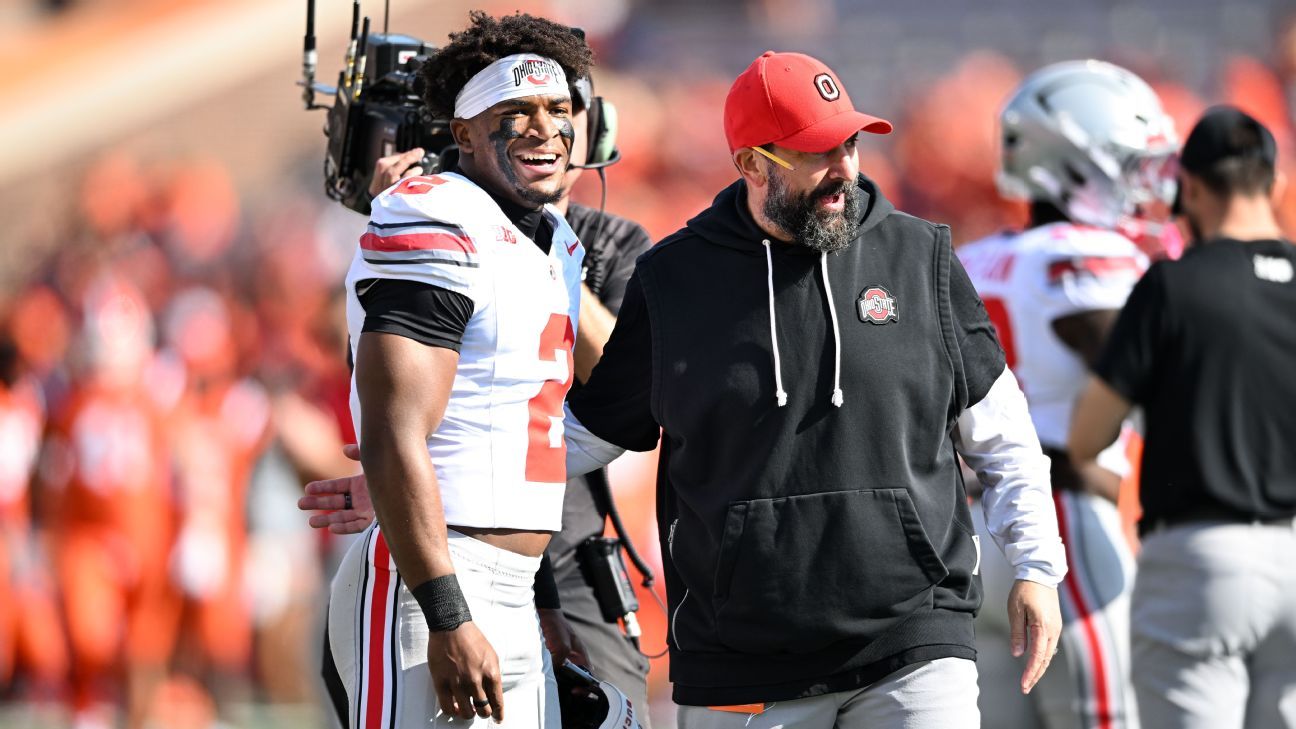
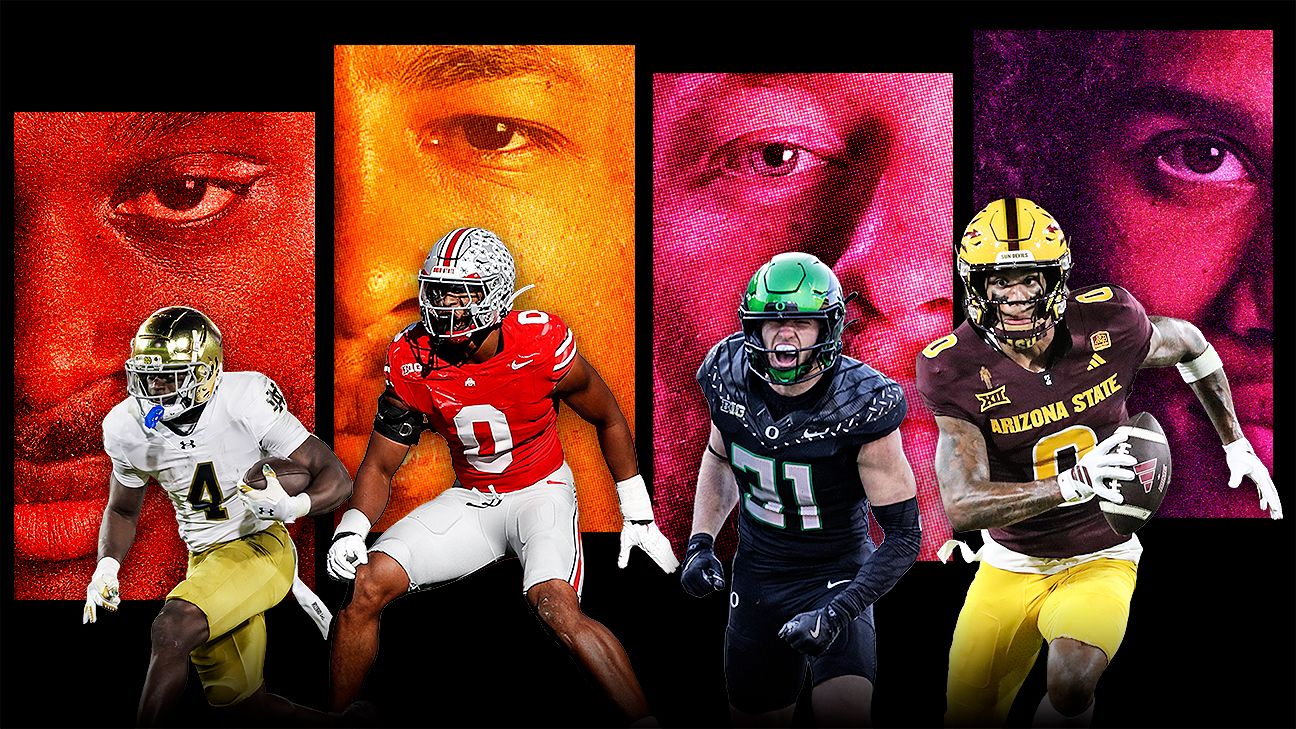
On Thursday night, they're expected to take an edge rusher with the second overall pick, David Bailey (Texas Tech) or Arvell Reese (Ohio State). They also have the 16th, 33rd and 44th selections, an opportunity to plug several holes on both sides of the line of scrimmage. No team has that many selections in the top 44. They have nine picks total.
"We're going to be better [in 2026], and having three ones gives us a lot of flexibility in the future," general manager Darren Mougey said. "So I'm excited about the three ones in 2027, but really excited about the draft capital that we have this year, too."
With so many picks, Mougey can be one of the power players in the draft. He can move up or down the board, targeting specific players or accumulating extra draft capital. His "phone is going to be ringing off the wall," according to Johnson, who was known for his ability to maneuver around the board.
In the early 1990s, Johnson was so hell-bent on maximizing trades that he created a trade value chart, assigning a point value to every slot in the draft. For decades, it was used by teams throughout the league. He said Mougey, already known as a shrewd trader, has a rare opportunity to compound his supply of picks.
"You can build on this if -- if -- you realize the value of the picks," Johnson said.
A recent example: The Houston Texans, with extra picks from the Deshaun Watson trade, came out of the 2022 and 2023 drafts having made seven selections in the first two rounds. It could've been more, but they traded some capital to move up in 2023 to draft defensive end Will Anderson Jr. at No. 3 overall. The combination of Anderson and quarterback C.J. Stroud (No. 2 overall) has propelled the Texans to three straight playoff appearances since after an 11-38-1 record in their three previous seasons.
After the Cowboys' dynasty, the Vikings (1994-95), New England Patriots (2009-10) and Denver Broncos (2009-10) tried the stockpile route -- consecutive drafts with at least eight picks in the first two rounds. All three teams were successful, as the Broncos and Vikings became perennial playoff contenders and the Patriots maintained their status as such. The Patriots and Broncos won Super Bowls in the 2014 and 2015 seasons, respectively, but they did so with all-time greats at quarterback, Tom Brady and Peyton Manning.
That should resonate with the Jets, who remain in a perpetual search for a franchise quarterback. This season, they settled for a bridge quarterback, Geno Smith, acquired in a low-cost trade with the Las Vegas Raiders.
"All these picks, there's only one of them that matters: They have to get the quarterback right," NFL Network draft analyst Daniel Jeremiah said.
"They can draft a bunch of great players and build out this roster, but that's the one pick they have to get right unless they can miraculously hit on one of these vets, and we'll see what Geno does this year," Jeremiah added. "That, to me, is going to be the thing that turns the whole thing around. But they are positioned to get this roster up and going."
With Indiana's Fernando Mendoza expected to be picked first overall by the Raiders, the only other quarterback with first-round buzz is Alabama's Ty Simpson. It would be a surprise if the Jets take him with the 16th pick. Jeremiah said "all signs" point to them waiting until 2027, which is supposed to be a loaded quarterback class.
"That's the biggest key: You have to make sure you have your quarterback," said Johnson, who had a young Troy Aikman when he made the Walker trade. Therein lies the rub: No quarterback, no successful rebuild.
Mougey's plan isn't original. His predecessor, Joe Douglas, tried the same thing, trading away top players (safety Jamal Adams and defensive lineman Leonard Williams) to stockpile draft picks. Some of those picks worked out nicely, most notably Gardner and wide receiver Garrett Wilson, but the rebuild backfired because his quarterback pick, Zach Wilson, was a major disappointment.
Wilson's failure led them to Aaron Rodgers, whose two-year run -- undermined by a torn Achilles -- was marked by heartbreak, dysfunction and, ultimately, a regime change.
Enter, the Mougey-Glenn tandem, which has exhibited patience as it attempts to execute a long-term rebuild. The wild card is owner Woody Johnson, who hasn't spoken to the media since last October and was said to be upset by the 3-14 season. More than half the coaching staff was fired after last season, often a sign that an owner's patience is wearing thin.
When coaches and GMs feel heat from within, it can lead to personnel decisions made from self-preservation. This isn't to suggest that Mougey and Glenn will fall into that trap, but it happened to some of their predecessors.
"A lot of coaches and GMs, they're so conscious of their jobs," Jimmy Johnson said. "They have to win now. I didn't look at it that way. I said, 'We have to build this team for the future.'"
Starting Thursday, the Jets get a chance to do just that.