 1 month ago
29
1 month ago
29
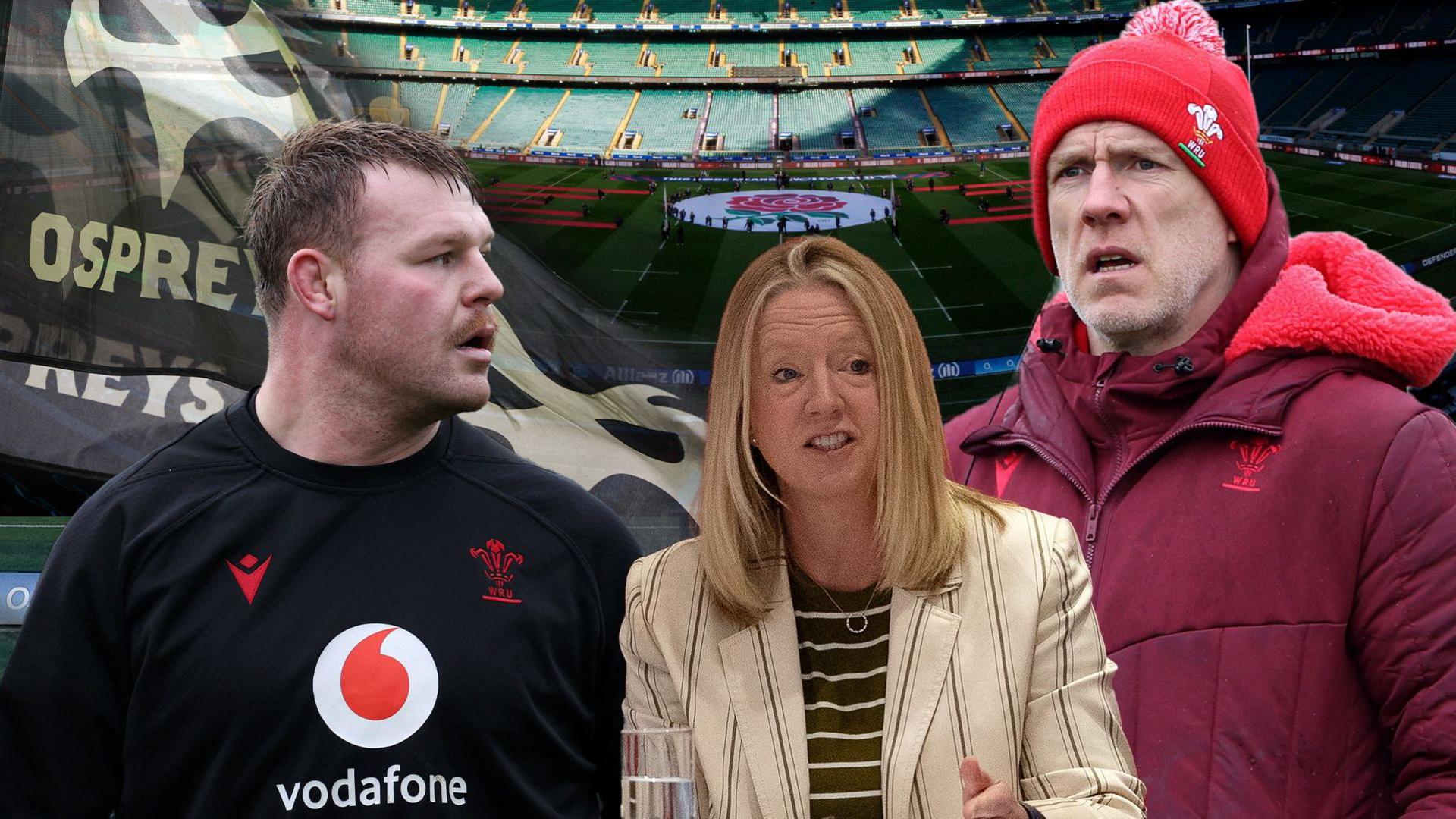 Image source, Huw Evans Agency
Wales will look for an improvement on the pitch in this year's Six Nations amid yet more turbulence off the field
ByGareth Griffiths
BBC Sport Wales
Travelling to Twickenham to face England has provided Welsh fans with some magic memories over the years.
JPR Williams rampaging through the Red Rose defence, Adrian Hadley gliding over, Scott Williams' rip and rampage to Triple Crown glory and Gareth Davies and Dan Biggar breaking English hearts in their own World Cup in 2015.
But in 2026, the landscape looks very different.
There is continued discontent in Welsh rugby with Steve Tandy's side arriving in south-west London this weekend with faint hope of a positive result from fans, but little expectation from most observers.
This week's build-up to the Six Nations opener has been a sideshow to Welsh rugby's ongoing, deep-rooted crisis. The latest issue is the potential disappearance from professional rugby of Swansea-based Ospreys.
Welsh rugby has given the nation much delight in the past, with famous victories and Grand Slam memories, but for many the life is now slowly being sucked out of the game in Wales.
So how has a nation that topped the world rankings less than seven years ago fallen so far, so quickly?
The day Gatland started 13 Ospreys at Twickenham
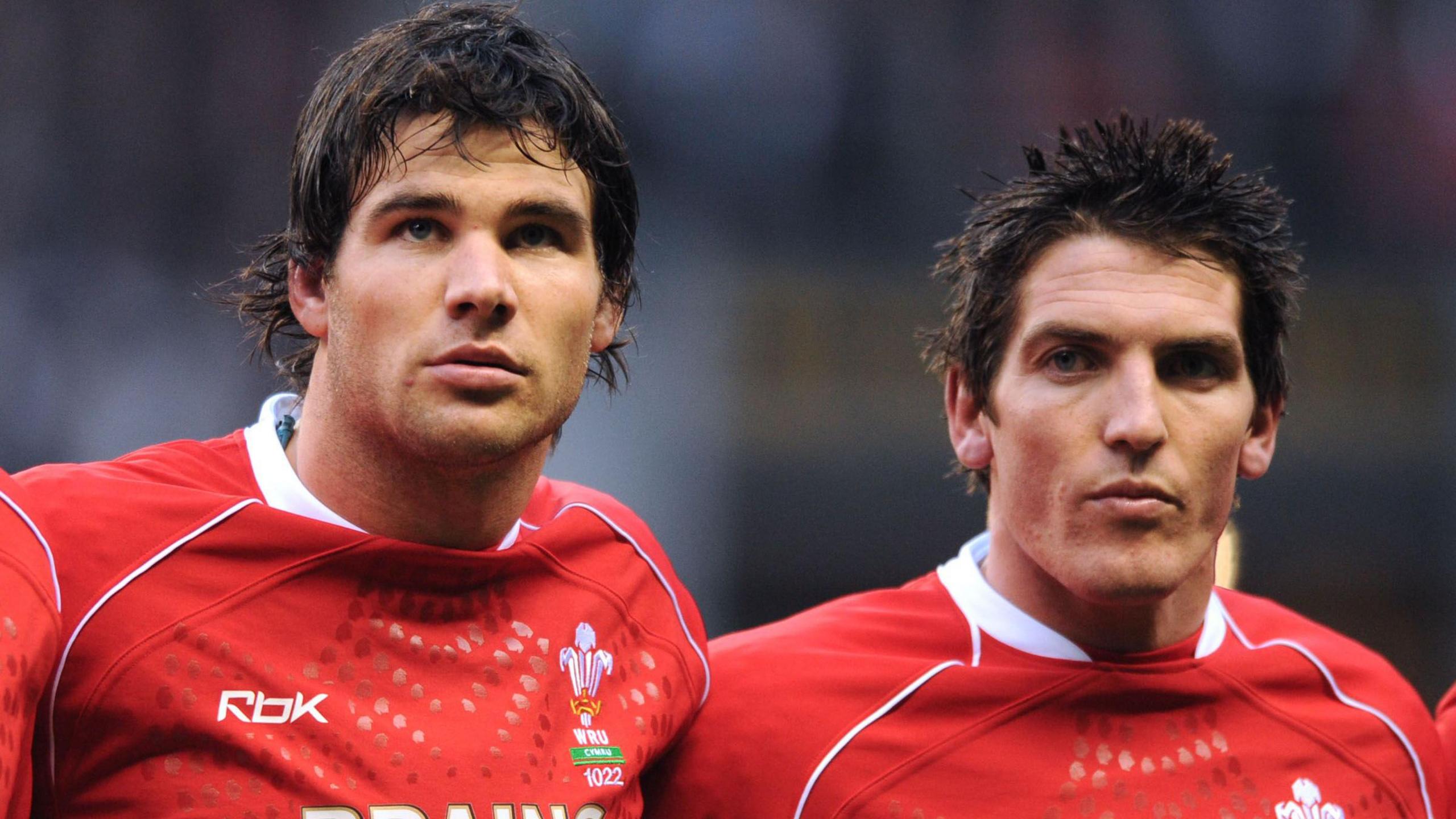 Image source, Huw Evans Agency
Half-backs Mike Phillips and James Hook started for Wales along with 11 other Ospreys players in the 26-19 win against England in Twickenham in 2008
Ospreys have previously been the saviours of Welsh rugby at Twickenham.
Eighteen years ago, Wales travelled to face England in a Six Nations opener which was also Warren Gatland's first game in charge.
The New Zealander had spent less than two weeks with his new squad and famously went for familiarity, making the historic decision to start 13 Ospreys.
Cardiff flanker Martyn Williams and Scarlets wing Mark Jones, the current Ospreys head coach, were the exceptions.
The policy worked as Wales won 26-19 on their way to a Grand Slam. They were also Grand Slam winners in 2012 and 2019, with a further Six Nations title in 2013 and two World Cup semi-finals during that period.
Ospreys provided a large number of Gatland's players during his first stint in charge, as they became the most successful side since the inception of regional rugby 23 years ago, claiming four league titles between 2003 and 2012.
They produced Shane Williams, who won World Rugby's player of the year in 2008, while Ospreys' record appearance holder Alun Wyn Jones is also the world's most-capped international.
That is before you mention former star players such as Gavin Henson, Mike Phillips, Tommy Bowe, James Hook, Justin Marshall, Jerry Collins, Justin Tipuric, Adam Jones and Ryan Jones.
There are eight Ospreys players in the current squad and four involved against England this weekend, while Tandy himself is a former player and coach at the region.
But a rich recent history is now being threatened.
England v Wales
2026 Guinness Six Nations
Saturday, 7 February, 16:40 GMT
Allianz Stadium, Twickenham
Live audio commentary on BBC Sounds via BBC Radio 5 Live, BBC Radio Wales and BBC Radio Cymru and on the BBC Sport website alongside live text commentary.
England build-up has been a sideshow
“Wales not being competitive, there’s a massive piece of everyone’s heart missing, the game needs Wales.”
Alun Wyn Jones was part of the Twickenham triumphs of 2008, 2012 and 2015 and was Wales' captain when they were top of the world.
This week he found himself sitting in a council meeting in Swansea - alongside current and former players - discussing whether Ospreys would still be a top-tier side after next year.
The news that Ospreys owners Y11 Sport and Media have been named as the preferred bidder by the Welsh Rugby Union (WRU) to buy rivals Cardiff, who went into administration in 2025, sent shockwaves through Welsh rugby.
With the WRU committed to cutting a men's professional side, Ospreys' existence is in doubt.
The region covers proud rugby areas like Swansea, Neath, Aberavon, Maesteg and Bridgend, and there has been widespread criticism of the WRU's plans from current players, coaches and staff, who say they have been left in the dark.
There has been political condemnation, petitions and protests from supporters and former players, public meetings and threats of legal action from Swansea Council.
As a result the proposed restructure of the Welsh game has attracted the most headlines in a troubled Six Nations build-up, tied in with a fascination about why Welsh rugby has fallen into the abyss.
English, French and Irish journalists and broadcasters have been travelling to Wales to try to establish the reasons for the Welsh game being in such a state.
In previous years, the prospects for a Six Nations opener against England at Twickenham, now called Allianz Stadium, would have filled airwaves and column inches.
On this occasion, the match has not been mentioned in Wales as much as the off-the-field issues affecting Welsh rugby.
The belief in a huge gulf between the rivals has led to alarmingly few giving Tandy's team a hope against an England side who embarrassed Wales 10 months ago with a 10-try, 68-14 demolition victory in Cardiff.
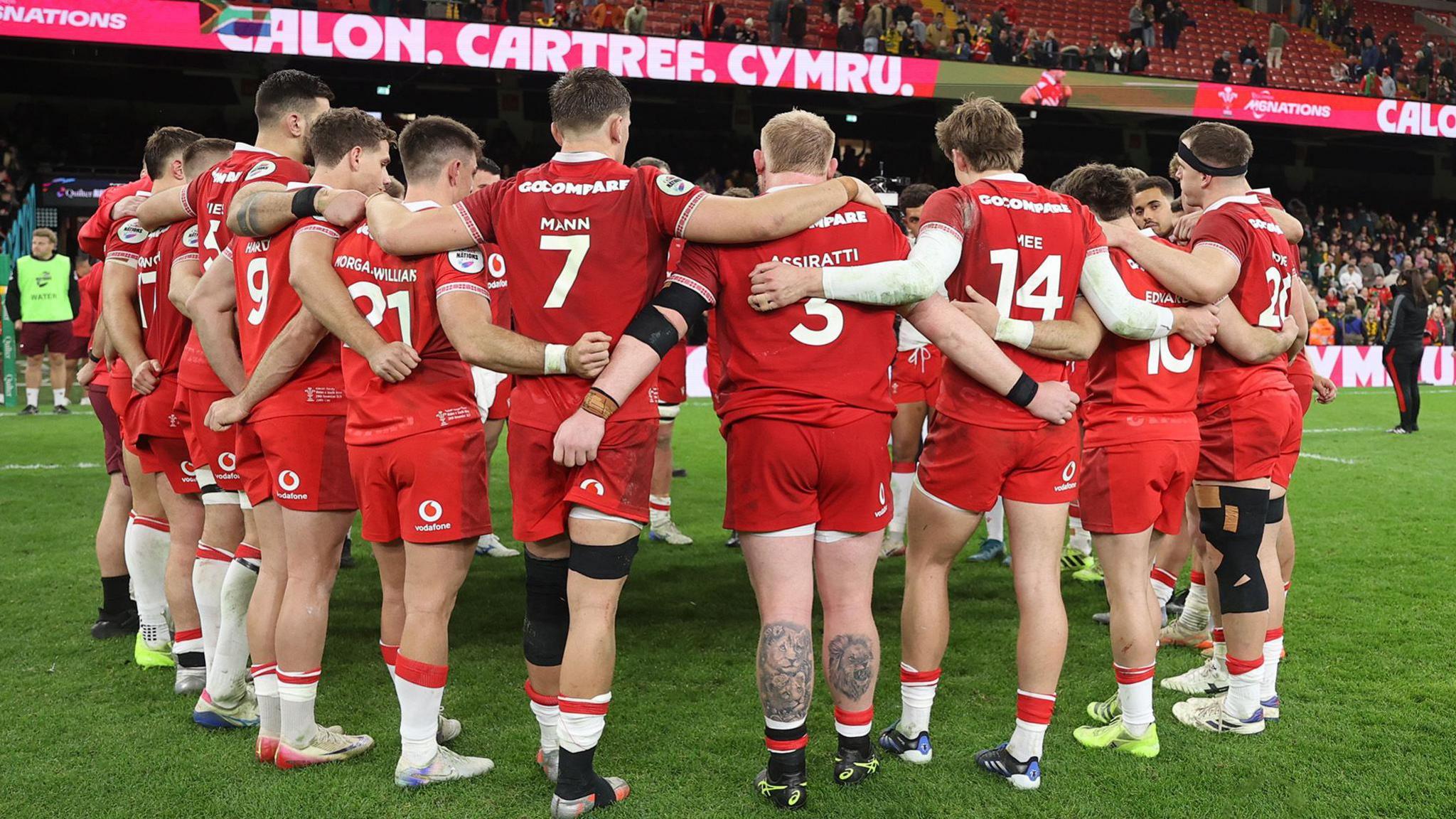 Image source, Huw Evans Agency
Wales have only not won a Six Nations home game in four years
The need for change is evident even if people vehemently disagree on how it should be achieved, with no fans wanting to lose their team.
Wales topped the world rankings briefly in 2019 and won the Six Nations title two years later.
It has been an alarming decline since, except for a run to the 2023 World Cup quarter-finals.
The slump is the result of the almost collective retirement of a golden generation of players.
The WRU lack of investment in the professional sides in recent years and the pathway intended to develop the next raft of stars has also contributed.
Wales men have lost 21 out of their past 23 internationals, with their only victories coming against Japan.
The various defeats included an unprecedented 18-match Test losing sequence and record home losses against England, Argentina and South Africa.
Wales have not won a Six Nations match since March 2023, when they beat Italy in Rome, with a record of 11 successive defeats resulting in two winless tournaments and consecutive Wooden Spoons.
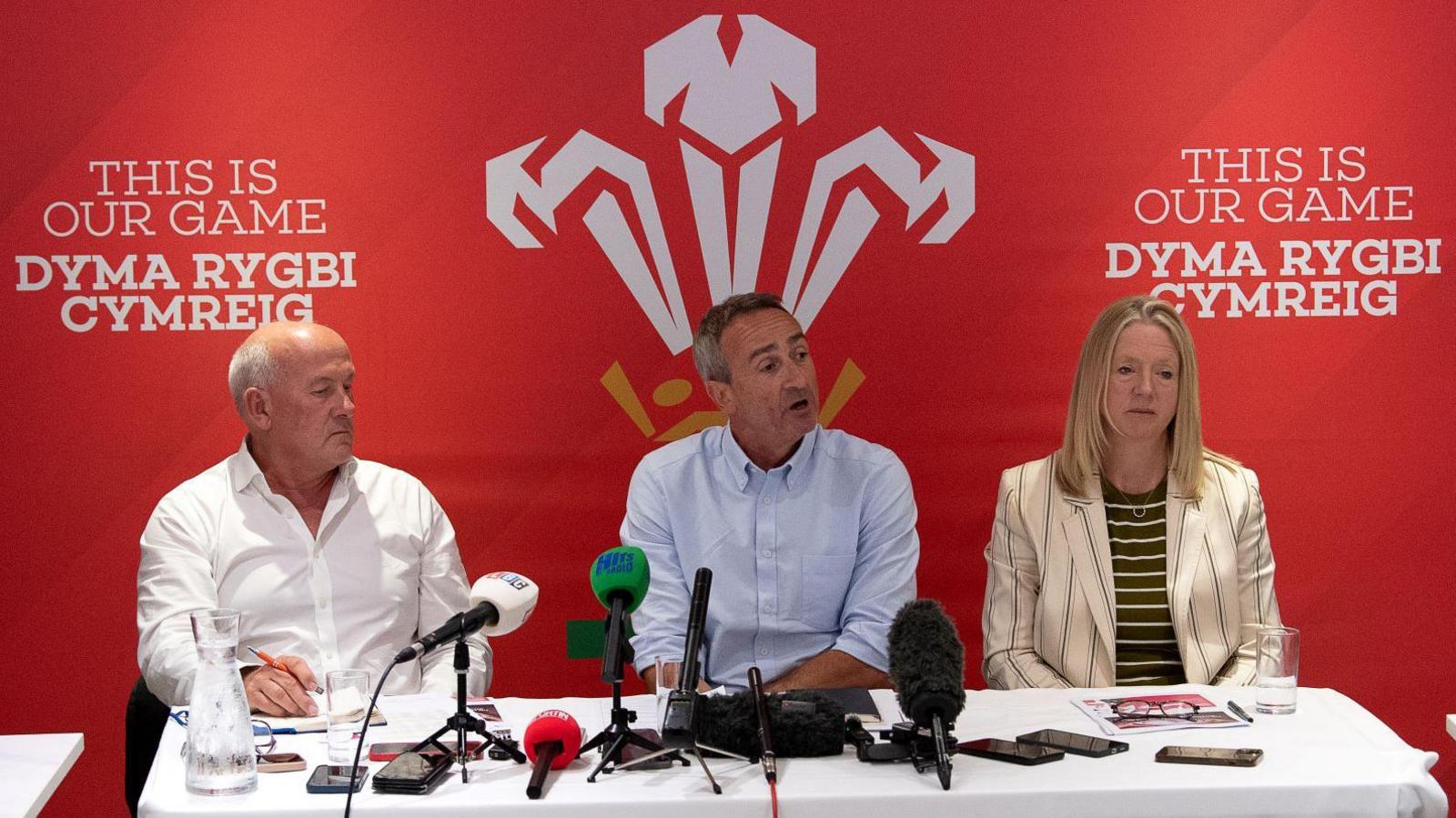 Image source, Huw Evans Agency
Welsh Rugby Union chair Richard Collier-Keywood, director of rugby Dave Reddin and chief executive Abi Tierney are the main decision-makers at the governing body
Wales have not won a home Six Nations game since defeating Scotland in February 2022.
It is the Principality Stadium stage where Wales' plight could be most visible during the next six weeks. Wales have home matches against France, Scotland and Italy, with ticket sales slow.
More than 50% of Welsh rugby's turnover comes from revenue from Wales men's internationals.
Fans walking away could hit the Welsh game in the pocket. But walking away they are and rugby is no longer the be-all and end-all in Welsh sport.
Last month, a parliamentary committee looking into the state of Welsh rugby was told by WRU chair Richard Collier-Keywood that the body retains the support of the fans.
That raised more than a few eyebrows, while Collier-Keywood is facing the prospect of a vote of no-confidence at a potential extraordinary general meeting with current faith and trust in the governing body questionable.
The union says it is trying to transform the struggling Welsh game by making hard decisions, including the loss of a professional side.
It argues two critical elements needed to sustain four strong teams are in short supply: enough money and quality players.
There are those who doubt the rationale behind losing a team and many who believe the union lacks the capability and knowledge to oversee the huge project.
The WRU's continued silence is also a problem, with no interviews given for the last few months by the hierarchy.
There have only been statements, prompting accusations of little transparency or clarity levelled at the governing body.
The continued controversies are not exactly setting up Wales' players to succeed.
'Welsh rugby is so toxic'
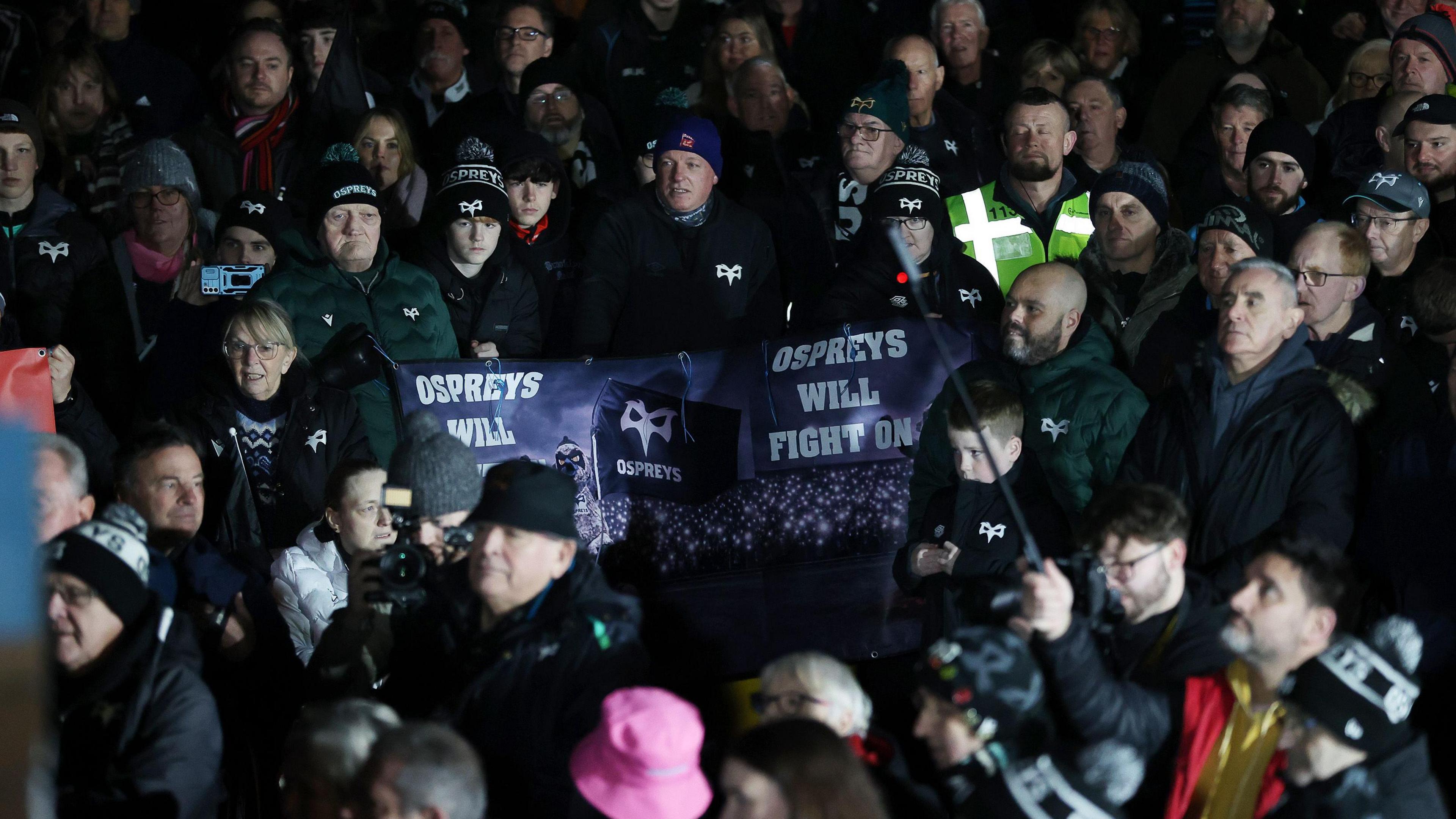 Image source, Huw Evans Agency
Ospreys supporters protesting against owners Y11 and the Welsh Rugby Union
Former Wales and British and Irish Lions centre Jamie Roberts is one of the 12 WRU board members.
He is one of the nation's most decorated players in the professional era but is now known for his union role.
So Roberts was part of the board that voted for the culling of one region and for Ospreys' owners to take over Cardiff, decisions which could contribute to ending Ospreys' time as a professional side.
Ospreys fans made their feelings known at a peaceful, but forceful, protest before last week's derby against Dragons in Bridgend, where Roberts was working as a television pundit and was booed by home supporters.
The move prompted one Welsh commentator to remark: "Sport is meant to be fun. Welsh rugby is just so toxic."
You cannot accuse Welsh rugby of being boring, but it does not bring much enjoyment right now.
Whether that can start to change this weekend, in Tandy's first Six Nations game in charge as Wales aim to build on some positive aspects of the previous autumn, remains to be seen.
Tandy has experienced a baptism of fire since starting as he aims to rekindle a struggling side, while navigating off-the-field problems that are not of his making.
If he could somehow deliver a win over England and provide one of the biggest upsets in Welsh rugby history - what a catalyst that could be.
The same problems would remain, but that glimmer of hope would return. How Welsh rugby needs it.
The Six Nations - we're all in