
Bradford DoolittleMar 27, 2026, 07:00 AM ET
- MLB writer and analyst for ESPN.com
- Former NBA writer and analyst for ESPN.com
- Been with ESPN since 2013
We begin the 2026 season exactly like we did in 2025: Twenty-nine teams are still chasing the defending champion Dodgers and, once again, Los Angeles profiles as the clear front-runner.
One thing last season reminded us: Even if the apparently inevitable comes to pass, it can still be exhilarating. Yes, the Dodgers were heavy favorites to win it all. Yes, they did win it all. But to fulfill that destiny, the Dodgers had to survive a World Series for the ages. They did so even as the outcome would have been different if any of a number of plays had gone against them.
Even for the Dodgers, winning a World Series is hard. As much as they hover above everyone else on paper, they still have less than a one-in-three chance to win a third straight crown. That's just baseball.
In what has become an annual project, we've structured our last Stock Watch of the offseason as a glance at the championship landscape, placing teams on different tiers based on their chances to win it all.
To have a surprise pennant winner coming from outside the top couple of tiers is barely a surprise, as last season it happened again. The Blue Jays started from a Tier 3 slotting in 2025. The rating was reasonable. Toronto was coming off a 74-win season, and the chatter around the Jays was whether a failure to reach an extension agreement with Vladimir Guerrero Jr. might lead to a reset. Things look a lot different now.
Where does your team stand in the pecking order for 2026 World Series hopefuls?
Jump to a tier:
Tier 1: The Dodgers' time is now | Tier 2: Their time could be now
Tier 3: We're saying they have a chance | Tier 4: Wait 'til next year
Tier 5: Two years away, at least

Tier 1: The Dodgers' time is now
Typically, teams in Tier 1 are the front-runners to land the top seed in their league and should be all-in trying to win the World Series. This year, we've reserved the tier for one team.

1. Los Angeles Dodgers
Champions: 27.6% (Last Stock Watch: 29.0%)
Win average: 101.9 (Last: 102.4, 1st)
In the playoffs: 97.7% (Last: 97.8%)
Franchise temperature: 251.4 degrees. After consecutive titles, the Dodgers have not only reached a high point in their history but actually are hotter than any franchise has been outside of a few editions of the Yankees. The record high is 399.2 degrees, set when the 1962 Yankees beat the Giants to win their 20th World Series in 40 seasons. (Yes: From 1923 to 1962, the Yankees won exactly half of all World Series played.) The game has changed so much that you wouldn't expect the feats of the old Yankees to ever be matched, but with the run the Dodgers are on, it's hard to put a cap on where this might go.
Pivotal number: 112⅔. This is Clayton Kershaw's innings count from his final season, which happened to rank second on the Dodgers. Only Yoshinobu Yamamoto had anything resembling a normal, full-time rotation workload. Eleven pitchers made five or more starts. This turned out to be a boon during the playoffs, as the Dodgers leaned hard on their most talented starters, who carried them to another title. Will the Dodgers' innings distribution look any more normal in 2026? Does it matter?
Tier 2: Their time could be now
Teams in this group are clearly in the win-now category (but still aren't the Dodgers).

2. New York Mets
Champions: 7.7% (Last: 7.1%)
Win average: 91.6 (Last: 91.2, 2nd)
In the playoffs: 78.4% (Last: 77.9%)
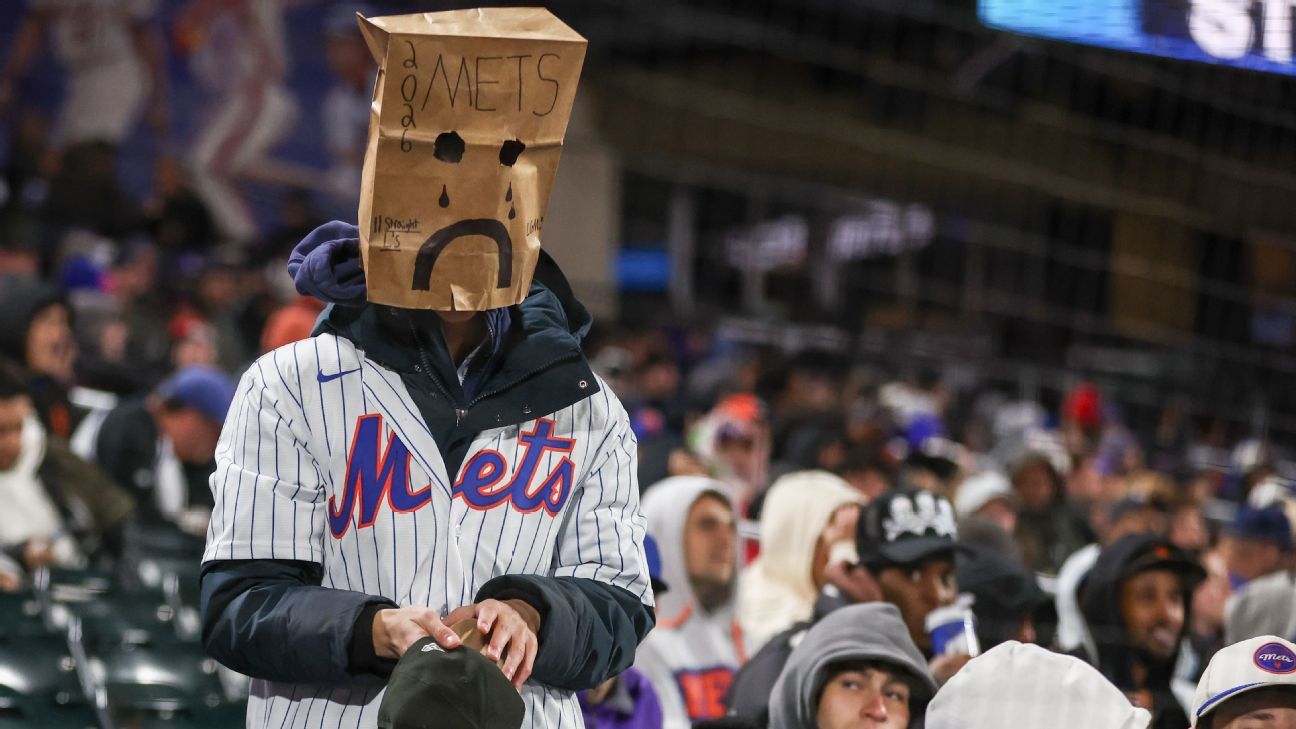
Franchise temperature: 57 degrees. The Mets' franchise is lukewarm but looking to turn up the heat -- or at least the right kind of heat. Since the heights of the 1980s powerhouses, the Mets just haven't stayed elite long enough to keep their region of the Big Apple as steadily warm as it has been in the Bronx. After an 83-79 campaign that typified that dynamic, this is a proof-of-concept season for the David Stearns regime. The Mets have retooled the roster toward better balance between offense and defense. The work Stearns has done on the minor league system has a number of promising players in the upper reaches. They look good on paper. All the elements are there for a special season in Flushing. Now, they have to make it happen -- or the heat around the Mets won't be from a soaring franchise temperature.
Pivotal number: 5. The Mets ranked fifth in wRC+ last season. That's a marker for an elite offense, one that ranked 10th in runs and fifth in homers despite playing half the time at Citi Field. Stearns' moves this winter were largely aimed at improving a defense that finished 19th in Statcast's fielding runs metric. A key to this season will be seeing that No. 19 ranking improve without those offensive rankings slipping much, if at all. It's a tough needle to thread.

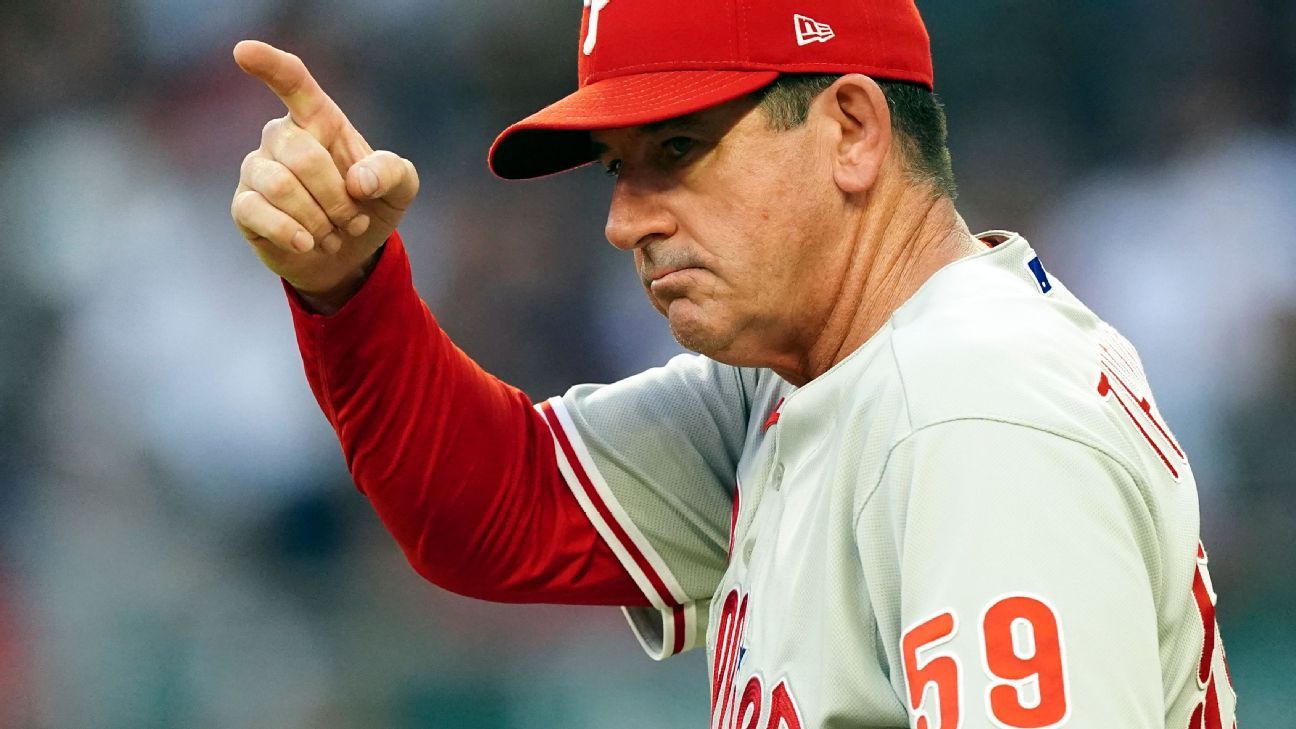
3. Philadelphia Phillies
Champions: 5.9% (Last: 4.8%)
Win average: 90.3 (Last: 89.7, 5th)
In the playoffs: 73.9% (Last: 71.9%)
Franchise temperature: 99 degrees. The Phillies have put up three straight seasons of 90 wins or more since losing the 2022 World Series. The past two campaigns have seen quick playoff exits and raised questions about how much longer the Phillies can remain elite with the same core group. After spending big to keep the gang together, the Phillies still profile as an elite club. You can't say that this season is their last shot with this group, but we are at the point where it feels as if each new season is the Phillies' best remaining chance to win it all until after some future rebuild. The thermometer is likely to indicate chillier days from here.
Pivotal number: .292. That was Bryce Harper's average on balls in play last season, and it's about 30 points below his career mark. That figure has ranged as high as .359 in recent seasons. His line drive rate was down, as well, so you can't dismiss it all as bad luck. But that too tends to regress. Harper's markers mostly did not look much different. His strike zone indicators were stable, as was his exit velocity and bat speed. There is every reason to think Harper will have a better 2026. The thing is, the Phillies really need it, because as awe-inspiring as Kyle Schwarber's power bat has become, Philly just can't count on him hitting 56 homers again.

4. Atlanta Braves
Champions: 5.5% (Last: 7.6%)
Win average: 89.8 (Last: 91.2, 2nd)
In the playoffs: 71.6% (Last: 77.5%)
Franchise temperature: 116 degrees. The Braves' cooling period since their 2021 title accelerated last season, with Atlanta's first losing campaign since 2017. Injuries were a key factor in that, but this is now a multiple-season trend. After that championship, Atlanta seemed poised to raise its temperature to the level of the 1990s/2000s Braves, which set the franchise standard at 174 degrees in 1999. This is a pivotal season in determining if the Braves are still on that kind of run.
Pivotal number: 1. That's the number of starting rotations the Braves had on the injured list as the 2026 season began. AJ Smith-Shawver, Spencer Strider, Hurston Waldrep, Spencer Schwellenbach and Joey Wentz are all on the shelf with various injuries and return timetables. The lineup, at least, looks healthy to start the campaign, which is good because the Braves might have to win a few slugfests over the opening couple of months, at least when Chris Sale doesn't start. If they win more than their share, this initial obstacle might prove to be a boon late in the season, when some or all of these pitchers return and have limited digits on their innings clickers.

5. Seattle Mariners
Champions: 7.4% (Last: 8.0%)
Win average: 89.6 (Last: 90.1, 4th)
In the playoffs: 71.6% (Last: 73.7%)
Franchise temperature: 47 degrees. The Mariners peaked as a franchise way back in 2003, when a non-playoff, 93-win season got them to 52 degrees. If Seattle meets its lofty preseason forecasts over the months to come, it would mark the Mariners' sixth straight winning season and push the organization to its peak. If Seattle parlays that into a World Series debut, you won't need franchise temperature to tell you that this is the high point of Mariners history, so far.
Pivotal number: 0. Yes, that's the number of pennants the Mariners have won, and that's been the total at the beginning of each of Seattle's 50 seasons. Last year, Seattle fell one agonizing win shy of finally changing that number. But as the Mariners celebrate half a century in baseball, they do so as the top-ranked American League team in this system. The league's top tier is crowded, but with a deep, talented roster at every position group, this M's team has as good a chance as any to end its existence-long drought.

6. New York Yankees
Champions: 7.0% (Last: 7.3%)
Win average: 89.3 (Last: 89.4, 6th)
In the playoffs: 69.7% (Last: 69.8%)
Franchise temperature: 157 degrees. The Yankees finished with the same record and virtually the same Pythagorean win total as 2024, yet the past two seasons seemed very different. That just goes to show you how much of the Yankees' fortunes depends on what happens in October. The Yankees are good once again, really good, but by the time we can assess whether 2026 marked any degree of progress, summer will be behind us and we either will or will not be seeing a ticker-tape parade in the Big Apple.
Pivotal number: 4. The stuff Gerrit Cole has flashed in limited game exposure this spring suggests that whatever Cole we get, it'll be vintage Cole. Last season, Carlos Rodon -- who starts 2026 on the injured list -- and Max Fried went a combined 37-14 with a 2.97 ERA and 392 strikeouts. Cole would turn last season's elite big two into an elite big three. All that is before we consider 2025 autumn sensation Cam Schlittler. The Yankees have a tough division to navigate over the next six months, but getting that foursome lined up healthy and strong when the postseason arrives might define how 2026 is remembered in the Bronx.

7. Detroit Tigers
Champions: 6.2% (Last: 5.0%)
Win average: 88.6 (Last: 87.6, 9th)
In the playoffs: 69.7% (Last: 65.0%)
Franchise temperature: 53 degrees. The Tigers ended a cooling period of longer than a decade in 2024 and turned up the heat a little more with another playoff run in 2025. Though the roster needs one more offensive catalyst to complete this contention puzzle, Detroit increasingly looks like a team ready to sizzle. More importantly, the Tigers look like a franchise poised to stay hot for seasons to come and eventually challenge the heights reached by their forerunners in the 1980s, who topped out at 108 degrees with the 1984 World Series championship.
Pivotal number: 742. That's the combined number of career wins for Justin Verlander (266) and saves for Kenley Jansen (476). They are the active career leaders in those categories, and they are also now both members of the Tigers' pitching staff. But this is not a "look at the famous old dude we signed" situation. Detroit needs these guys to produce, because the Tigers seem like a team very close to getting over the top. You've got to love the fact that of the two Tigers who will be most closely watched early the season, one (Verlander, who turned 43 years old in February) is almost exactly twice as old as the other (rookie shortstop Kevin McGonigle, who turns 22 in August).

8. Chicago Cubs
Champions: 4.8% (Last: 4.0%)
Win average: 88.6 (Last: 88.2, 7th)
In the playoffs: 68.0% (Last: 66.6%)
Franchise temperature: 75 degrees. The franchise temperature system isn't overly impressed by middling, non-playoff seasons like the Cubs put up in 2023 and 2024. It is impressed by what Chicago did last year in pushing its win total to 92 and winning a wild-card series. This ended a long period of temperature drops that began when the Bryant-Rizzo-Baez Cubs began to fade. This year's club looks capable of really heating things up at Wrigley, and North Siders should appreciate it. This is a franchise that floundered under 50 degrees from the early 1950s until the 2016 club won it all.
Pivotal number: 255⅔. If you combine the career-high innings total for new starter Edward Cabrera (137⅔) with the number of frames put up by Cade Horton as a rookie last season (118), this is what you get. A healthy Cubs rotation features the high floor provided by Shota Imanaga, Matthew Boyd, Jameson Taillon and, at some point, Justin Steele. But the best chance for this group to become truly special is for Cabrera and Horton to be full-season catalysts. If that happens, this number will look more like 340.

9. Toronto Blue Jays
Champions: 6.0% (Last: 5.4%)
Win average: 88.5 (Last: 88.2, 7th)
In the playoffs: 65.7% (Last: 64.5%)
Franchise temperature: 77 degrees. Toronto's first pennant since 1993 warmed things up for a franchise that has wallowed in lukewarm waters for a couple of decades. A championship this season would put the Blue Jays' apex (162 degrees, after the 1992-93 championship seasons) on the radar. Given the overwhelming response of the Toronto fan base last season, if that happens, Canada might be the place to be in the baseball world in a few months.
Pivotal number: 59. That's the difference between Kazuma Okamoto's projected batting average (.252), per Baseball Prospectus, and Bo Bichette's actual 2025 mark (.311). Okamoto's power bat and defense should transition from the NPB just fine. His scouting report describes a well-balanced hitter, and that's key because the Blue Jays are looking to maintain not just the run total of last season, but also the style of their attack, one that mitigated volatility and held up so well in the playoffs. The fuller Okamoto's slash line turns out to be, the more this year's Jays will look like the version we saw last year when Bichette was healthy.

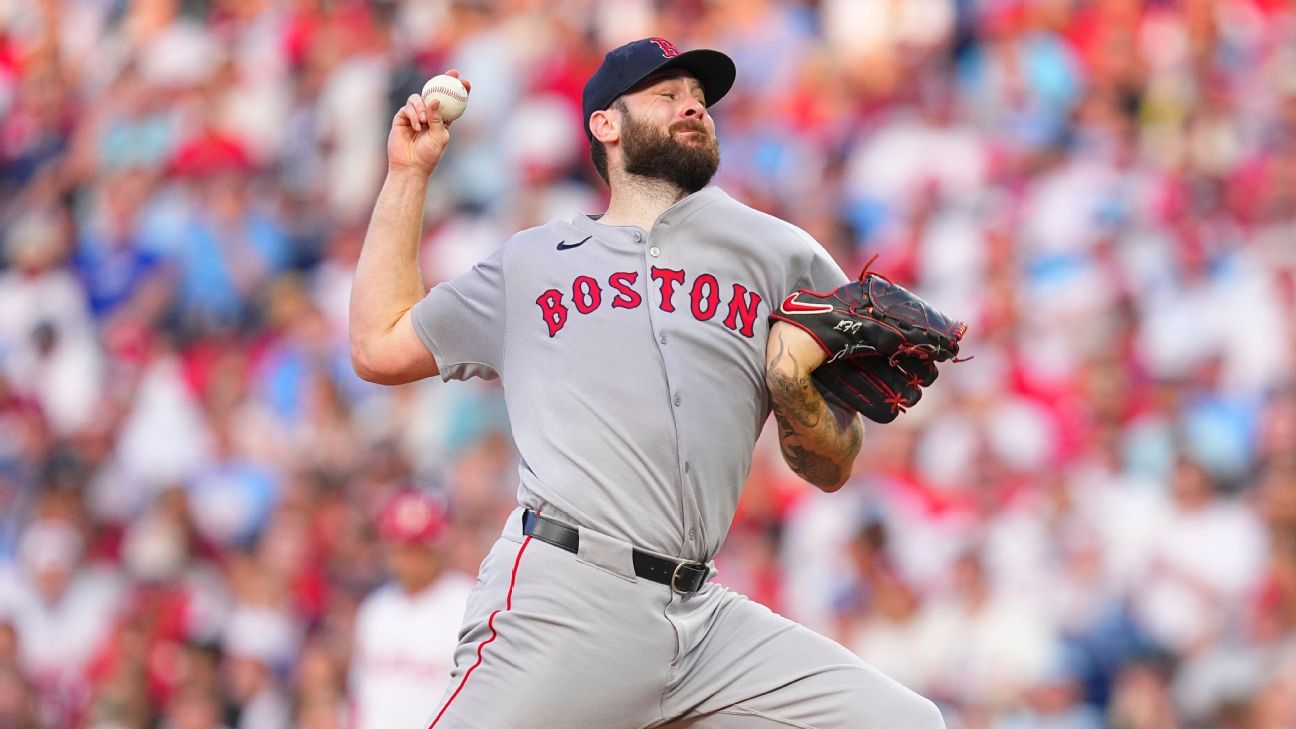
10. Boston Red Sox
Champions: 4.9% (Last: 4.5%)
Win average: 87.3 (Last: 87.1, 10th)
In the playoffs: 59.5% (Last: 59.6%)
Franchise temperature: 119 degrees. Increasingly tepid. The Red Sox are still pretty warm but nevertheless are at their lowest level in 20 years. Last year's 89-73 regular season marked progress from three straight seasons of utter mediocrity, but Boston was unable to parlay that into a postseason series win. In a division with four of our top 11 teams, tepid isn't going to get it done.
Pivotal number: 71. That's the number of games Anthony played as a rookie. To be fair, he didn't make his MLB debut until June, but he subsequently missed 26 days with an oblique strain. All signs are that Anthony is ready to explode on the American League. The Red Sox really need that number to double, at least. The forecasts like Boston's position entering the season. If the Rex Sox win their way into a playoff slot, they need Anthony to be healthy then, too.

11. Baltimore Orioles
Champions: 3.5% (Last: 3.7%)
Win average: 86.2 (Last: 86.3, 11th)
In the playoffs: 53.9% (Last: 54.4%)
Franchise temperature: 38 degrees. The days of rising temps in Maryland are teetering. A lot went wrong last year, but all the forecasts see the Orioles as a bounce-back team this year with a better than 50-50 shot at returning to the postseason. At the same time, if the Orioles once again fall woefully short of preseason expectations, you have to wonder about a lot of things in the organization. This will be, after all, the fifth season since the rebuild ended. So far, the Orioles are still looking for their first playoff win since 2014. This is a big season for the O's.
Pivotal number: 14. That's how many home runs the Orioles got from first basemen in 2025, the lowest figure in the major leagues. With Pete Alonso on board, it's reasonable to imagine that number increasing threefold in 2026. Obviously, the higher it goes, the better off the Orioles' offense will be.

12. Houston Astros
Champions: 2.1% (Last: 2.6%)
Win average: 84.3 (Last: 84.9, 12th)
In the playoffs: 45.5% (Last: 48.4%)
Franchise temperature: 173 degrees. The Astros missed the playoffs for the first time since 2015 but still won 87 games last season. Houston's dynastic run peaked at 201 degrees after its 2022 championship, and that number has since dwindled. That's likely to continue, if only because it takes a big win total and long playoff run to bolster a temperature this high. But it's also likely because the Astros are at the squeezing stage, twisting every little bit of contention out of a very rich period of the franchise's existence, one that is slowly drawing to a close.
Pivotal number: .430. Think of it like this: If the Astros get the version of Yordan Alvarez they had from 2022 to 2024, as compared to the one they had in 2025, that becomes one of the biggest acquisitions of the offseason. The number here is Alvarez's slugging percentage from his injury-ruined 2025. His games column is obviously key, but the return of Alvarez's slug would be a quick indicator that he's back. His isolated slugging (.158) was by far a career low, but Statcast didn't show any notable drop in bat speed or exit velocity. Expect that .430 number to go up by at least 120 points.
Tier 3: We're saying they have a chance
The odds look stacked against these teams in terms of immediate title contention, but a playoff berth is in play, so anything can happen.

13. San Francisco Giants
Champions: 1.3% (Last: 0.9%)
Win average: 83.4 (Last: 82.0, 17th)
In the playoffs: 40.5% (Last: 33.5%)
Franchise temperature: 87 degrees. A string of middling seasons hasn't led to a "Day After Tomorrow" kind of plummet, but the Giants have lost nearly 100 degrees since 2014, their third title season in a five-year period. That was the franchise's high point since the days of John McGraw, the Polo Grounds and Coogan's Bluff. The Giants are once again middling, as if they are relentlessly drawn to average.
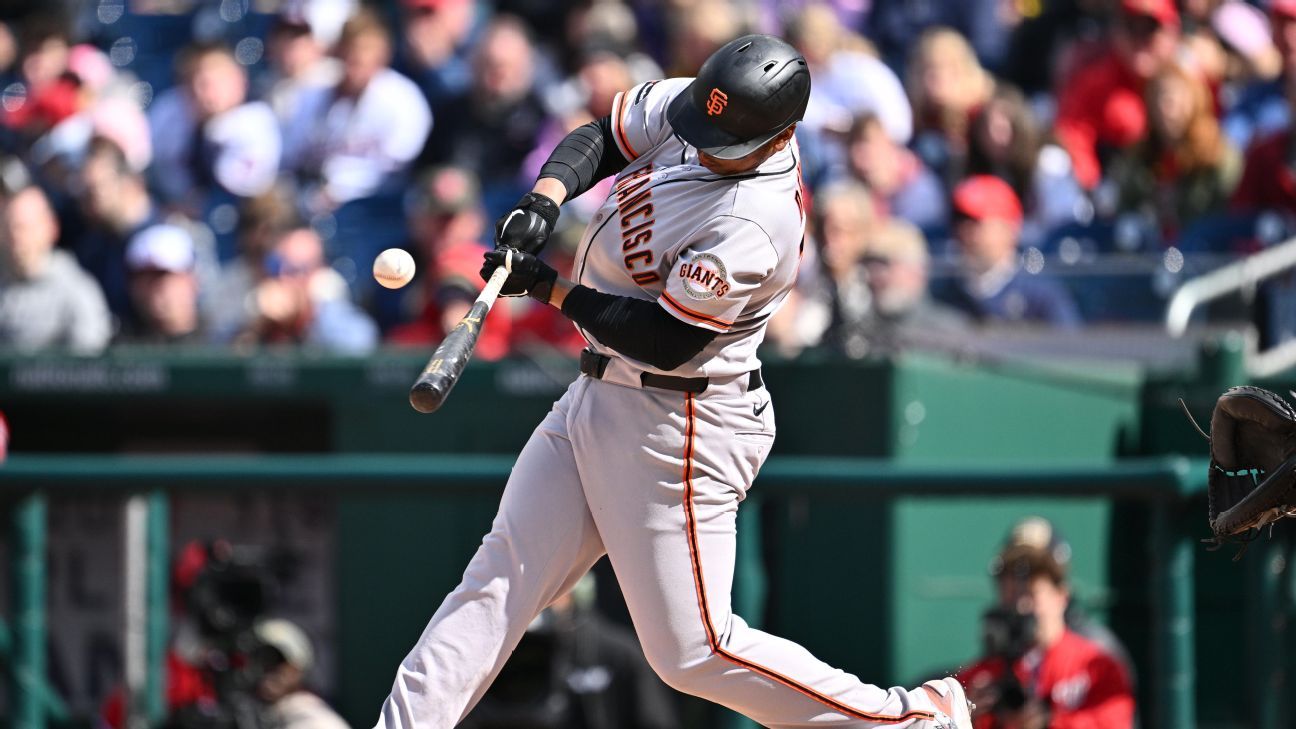
Pivotal number: 228. Bryce Eldridge struck out 19 times in 40 plate appearances this spring. Extrapolate that to a season with 600 plate appearances and you get 228 strikeouts, which would be a big league record. It's also only a slight increase over the rate at which he struck out during his 10-game debut last season. Eldridge was a fairly high-whiff player in the minors, where he'll begin this season, so to an extent, this might be simply who he is. Still, you hope he can find a bit more contact. Not to put it all on the kid, but the Giants' lineup looks like it's a power bat short, and if Eldridge can find some consistency, he'd be a great candidate to fill that need -- and he'd be a candidate for National League Rookie of the Year. For now, patience, by the team and Eldridge alike, is the best course.

14. Milwaukee Brewers
Champions: 1.5% (Last: 1.3%)
Win average: 83.2 (Last: 83.3, 13th)
In the playoffs: 41.1% (Last: 40.9%)
Franchise temperature: 65 degrees. Another season like the past one and the Brewers will reach a new franchise peak, which currently is the 70 degrees Milwaukee reached after winning its only pennant in 1982. You'll note that this apex is still below room temperature, which tells you a bit about Brewers history. It's really all about the playoffs; winning seasons are great to keep the house warm, but if you want to get hot, go deep into October. The Brewers did that last season, but as a franchise, they are still looking to take those last two smoldering steps.
Pivotal number: Minus-2. The Brewers were outhomered 85-83 in their home games during the 2025 regular season. It's a small number, and the thing that made Milwaukee so special last year was its ability to score in many ways. Only two other teams scored a lower percentage of their runs on homers. But when we consider translating regular-season success to a championship, you'd like to see the Brewers create a power edge in one of baseball's better home run parks. If it happens, it'll be due to growth from returning players such as Jackson Chourio, William Contreras and Andrew Vaughn. You don't want them to lose that thing they had in 2025, but getting Bernie the Brewer coasting down his slide a few more times would make a very good offense even better.

15. Texas Rangers
Champions: 1.9% (Last: 1.4%)
Win average: 83.0 (Last: 82.3, 16th)
In the playoffs: 39.3% (Last: 35.9%)
Franchise temperature: 87 degrees. A pair of mediocre seasons has kept the Rangers' temperature in the hot range after their 100-degree record high, achieved by winning the 2023 World Series. But the trend has been in the wrong direction for two straight seasons. Texas has a nice mix of veterans and young players, a new manager and a new offensive philosophy. Still, it feels like the general direction of this temperature could go either way. It's a big season for the Rangers.
Pivotal number: 83. According to Statcast, that was Globe Life Field's one-year factor for scoring, based on last season. That tied notoriously stingy T-Mobile Park in Seattle for the lowest in baseball. In 2024, that number was 90, and the year before that, when the Rangers won the World Series, it was 112, the third highest in the majors. Last season, the Rangers finished 26th in team OPS but led the majors with a 3.47 ERA. So an all-pitch, no-hit roster? Really? No one understands what the heck is going on with that ballpark. While we wrestled that enigma last winter, the Rangers were tasked with retooling their roster and style of play based on evaluations made ever more complicated by the bizarro ballpark. We'll see how they did.

16. San Diego Padres
Champions: 1.0% (Last: 1.3%)
Win average: 82.9 (Last: 83.3, 13th)
In the playoffs: 37.3% (Last: 40.9%)
Franchise temperature: 49 degrees. If this number seems surprisingly low, consider that the Padres have been working their way back from a franchise nadir of 17 degrees after the 2019 season. Certainly, San Diego is in a better place now. But the past three seasons have been very similar from a run differential standpoint. The Padres' Pythagorean win equivalents during that span have been 92, 90 and 90. Have the Padres plateaued? With a talented roster and a rabid fan base, this is a franchise bursting to have that one ultimate breakout campaign.
Pivotal number: 1.6. With Joe Musgrove and Griffin Canning starting off on the IL, this figure represents the combined 2025 bWAR total of the four members of the Padres' Opening Day rotation not named Nick Pivetta. Sure, there's plenty to like about Michael King and Randy Vasquez. German Marquez and Walker Buehler have had fine big league careers. But that number is what it is. For the Padres to hang with the Dodgers, this number is going to have to be much larger in 2026.

17. Kansas City Royals
Champions: 1.5% (Last: 1.7%)
Win average: 82.8 (Last: 82.8, 15th)
In the playoffs: 39.8% (Last: 40.4%)
Franchise temperature: 57 degrees. This feels like a good temperature for the Royals, who went into a period of rapid cooling after their contending rosters from the mid-2010s broke up. To the credit of J.J. Picollo and his staff, the Royals have curbed that decline and managed to settle in tepid waters. With a contention-worthy 26-man roster heading into 2026, they hope to wade a little closer to the warm sands of the shoreline ahead.
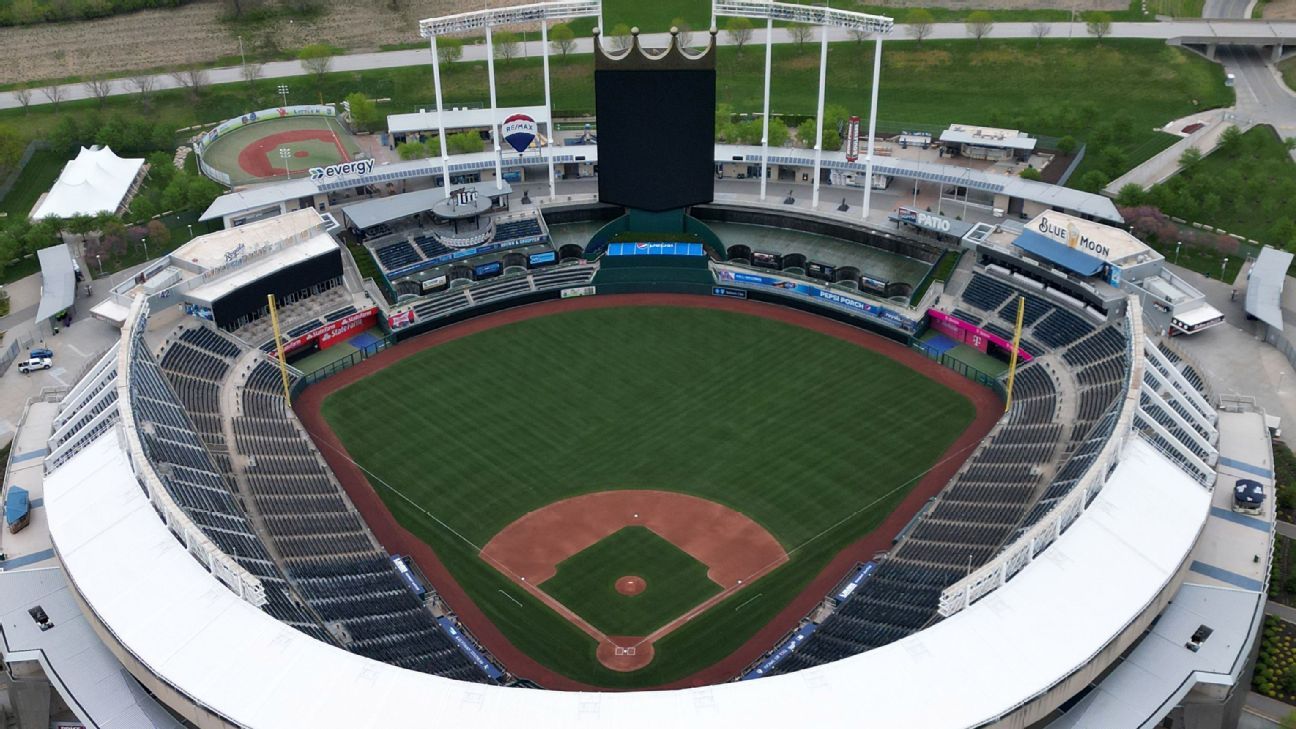
Pivotal number: 88. The Royals have clubbed that many homers at Kauffman Stadium twice in their history -- 2017 and 2023. In fact, the past five seasons account for five of the top eight homers-at-home seasons in franchise history. Despite this, the Royals have been outhomered at the K 409 to 375 during that span. Now the fences have been moved in, under the theory that the tinkering will benefit the Royals more than their opponents. It seems like Kansas City has a good shot at breaking that record of 88 home homers. But the key will be how the Royals' eventual total compares with that of the hitters from the other dugout.

18. Arizona Diamondbacks
Champions: 0.7% (Last: 0.7%)
Win average: 81.3 (Last: 80.6, 18th)
In the playoffs: 30.0% (Last: 28.4%)
Franchise temperature: 62 degrees. The Arizona story is a strange one, and with a right-down-the-middle forecast for 2026, it's hard to say which direction things are headed. In winning 100 games in their second season, then a championship in their fourth season, the Diamondbacks reached their summit quickly. After that was a long period of crumbling that culminated in a franchise-low 42-degree mark after the 2022 season. Then, in 2023, the Diamondbacks won their second pennant. Will this franchise ever sustain anything?
Pivotal number: .844. That nice-looking OPS is the figure posted by Diamondbacks first basemen from 2012 (when Paul Goldschmidt took over) through last season (when Josh Naylor served as Christian Walker's successor before being dealt to the Mariners). The Braves are the only team with a better first base OPS during that span. This season, Arizona appears to be going with Carlos Santana, who turns 40 on April 8, at the position. His 2025 OPS was .633.

19. Pittsburgh Pirates
Champions: 1.0% (Last: 0.4%)
Win average: 81.3 (Last: 79.9, 20th)
In the playoffs: 31.9% (Last: 25.5%)
Franchise temperature: 15 degrees. Sadly, as ice cold as that number is, it's not the Pirates' low point. That would be 12 degrees, set in 2012, right before Pittsburgh began a rare multiseason run of respectability. The Pirates have ended a season under 20 degrees eight times since 2007, a point lower than even the wretched Branch Rickey teams of the 1950s sank to. But look at this forecast. Average! Average for the Pirates is good. But with Paul Skenes warming all hearts in the Steel City, Bucs fans can dare hope for something even better than average.
Pivotal number: 82. The Pirates' OPS+ in 2025, which was 29th in the majors. No team scored fewer runs. Forecasts this time around have the revamped Pittsburgh offense in the top 20. If the pitching staff becomes the full-fledged behemoth so many think it can be, it's imperative that the offense prove itself early on. Because the more wins the Pirates bank early, the more likely it is that Pittsburgh will pursue an impact hitter during the season. That is, even beyond the anticipated ascension of Konnor Griffin.

20. Tampa Bay Rays
Champions: 0.7% (Last: 0.5%)
Win average: 79.4 (Last: 78.5, 22nd)
In the playoffs: 23.3% (Last: 19.9%)
Franchise temperature: 75 degrees. The past two seasons have seen a steep drop from the franchise-best 91 degrees the Rays were at after their 99-win 2023 season. The trip back into mediocrity hasn't pushed the Rays to reform their processes, at least the ones we can see. The past decade-plus suggests we should trust them on this. But after the past two seasons, it's on the Rays to demonstrate that their emphasis on micro-advantages still works.
Pivotal number: 100. That's a stolen base target for Chandler Simpson. He hit that mark in the minors in 2024 in just 110 games, so the skills are there. More important than the round number, though, is what it would mean for 2026: Simpson becoming entrenched as an everyday, top-of-the-order hitter who is manifesting his on-base skills at the big league level. With Junior Caminero looming behind a constantly on-base Simpson, the Rays would have quite a jump-start on a resurgent offense.

21. Athletics
Champions: 0.5% (Last: 0.5%)
Win average: 78.9 (Last: 78.2, 23rd)
In the playoffs: 21.0% (Last: 19.3%)
Franchise temperature: 47 degrees. Ever since the A's moved from Kansas City to Oakland in 1968, they've always managed to keep their occasional periods of awe-inspiring losing to a relative minimum. Once the Swingin' A's broke out in early 1970s, things have generally remained warm to hot. Heating periods started up before cooling periods could approach the freezing point. That dynamic has teetered over much of the past decade, and if the trend continues, the A's could be at their lowest point since 1971. Good news, Vegas fans: There are good things happening on your future club. They might yet hit Sin City on a heater.
Pivotal number: .757. Since the A's drafted Nick Kurtz fourth in 2024, he has played in 163 professional games, if you include his 13 appearances in the Arizona Fall League. So a full season, more or less. In those games, he has hit .307/.401/.638 with 50 homers, 137 RBIs and 135 runs. But what's really scary is that he hasn't hit lefties all that well. He's at .228/.300/.457 (hence a .757 OPS) against southpaws, with 12 homers. Yes, as eye-popping as Kurtz's rookie numbers were, there is room for improvement.

22. Cincinnati Reds
Champions: 0.4% (Last: 0.6%)
Win average: 78.4 (Last: 80.0, 19th)
In the playoffs: 20.2% (Last: 26.9%)
Franchise temperature: 33 degrees. A winning 2025 season pushed Cincinnati back over freezing, but don't take that red jacket off just yet. After losing two straight to the Dodgers in the wild-card round, the Reds still seek their first postseason win since 2012. This team has enough talent to end that streak, but it is in a deep tier of teams that can say the same thing. You could see the 2026 Reds challenge for a division crown. You could also see them looking up at a resurgent Pirates squad from fourth place. If that happens ... brrrrr!
Pivotal number: 49. The key to a surging Reds offense would be a three-pronged breakout from Matt McLain, Elly De La Cruz and Sal Stewart. But if some version of that happens, the puzzle would be completed by Eugenio Suarez's pursuit of this number in the home run column, a career high he set for the Reds in 2019 and matched last year. George Foster posted the only 50-homer season in Reds history (52 in 1977). Given the nature of Great American Ballpark, it's kind of a miracle that's still the case.
Tier 4: Wait until next year
These teams might be just a move or two away from climbing up the hierarchy.

23. Minnesota Twins
Champions: 0.5% (Last: 0.7%)
Win average: 77.9 (Last: 79.6, 21st)
In the playoffs: 19.4% (Last: 25.5%)
ETA: 2027-2028
Franchise temperature: 45 degrees. The Twins have toiled beneath 60 degrees since 2011. Even when they've won games and division crowns, they've been unable to parlay that into even a single deep playoff run. Now things appear headed back into the kind of deep chill those in the upper Midwest know all too well. There is talent on hand, young talent, but a lack of payroll investment and sudden instability from the dugout to the ownership box have led to a precarious point. It'll be on the Twins to prove that things are a lot more coherent in Minneapolis than they appear to be from afar.
Pivotal number: 5. That's the number assigned to the last-place team in a division, as the major leagues are currently structured. The Twins would have to really bottom out to get there, but the trajectories of the Twins and the White Sox seem to be pointed in opposite directions. The Twins' mass exodus of big league talent might be softened by the arrival of prospects, and Minnesota has some interesting ones. But the Twins have had so much trouble keeping their best prospects on the field, it's hard to be excited about that, either.

24. Cleveland Guardians
Champions: 0.4% (Last: 0.6%)
Win average: 77.7 (Last: 78.2, 23rd)
In the playoffs: 18.9% (Last: 20.4%)
ETA: 2027-2028
Franchise temperature: 75 degrees. The Guardians have hovered between 69 and 82 degrees after each season since 2016, when a pennant lifted them up from a chilly 50 degrees. That describes the post-pennant version of this franchise well. Nice and cozy. Not too hot, not too cold. This season looks like more of the same.
Pivotal number: 3,201. There are a lot of milestones Jose Ramirez will hit this season if he is healthy, and a number of franchise leaderboards he's climbing. This one is a favorite: When Ramirez hits 194 total bases this season, a total he has soared past in every full season since 2016, he'll pass Earl Averill as Cleveland's career leader. More than Tris Speaker, Nap Lajoie and Jim Thome. He's also likely to reach the 300 mark in both homers and steals, and the 1,000 mark in RBIs. Maybe as Ramirez reaches some of these numbers, more people will take notice of what a special player he has been for so many years. Somehow, he still seems overlooked.

25. Miami Marlins
Champions: 0.0% (Last: 0.0%)
Win average: 71.9 (Last: 71.8, 25th)
In the playoffs: 5.4% (Last: 5.7%)
ETA: 2027-2028
Franchise temperature: 29 degrees. This is it. The low point. The nadir. Rock bottom. Freezing temperatures in South Florida. That the Marlins have been middling in two of the past three seasons hardly matters in stemming this tide. Yes, there have been a couple of wild-card berths and winning records peppered in, but the Marlins have not outscored their opponents over a full season since 2010. It's time for this latest rebuild to start warming things up.
Pivotal number: 95⅓. The Marlins have every reason to anticipate a full-blown version of Sandy Alcantara this season. Even if that happens, Miami's best hope to hang around the wild-card chase is for Eury Perez to ramp up the volume. His 95⅓ innings last season, his first year back from surgery, were a career high. If Perez can reach 150 to 160 frames and get off to a hot start, the Marlins just might win enough games to make some of their hoped-for in-season prospect promotions a lot more interesting.

26. St. Louis Cardinals
Champions: 0.0% (Last: 0.1%)
Win average: 69.7 (Last: 71.3, 26th)
In the playoffs: 4.0% (Last: 5.2%)
ETA: 2028-2029
Franchise temperature: 99 degrees. The reliably respectable Cardinals have fallen into a rare franchise torpor, dropping their temperature under 100 degrees for the first time since 2003. I met a Cardinals fan at the airport in Phoenix. She was looking forward to the season, confident that this year can't possibly be as bad as last year. I kept quiet, but I should have told her to keep her winter gear handy. The Cardinals' decline shouldn't be a long one, but this is shaping up as a transitional season at best.
Pivotal number: 88. That's the number JJ Wetherholt put up in the minor leagues in both the walk and strikeout columns. If he can maintain that kind of zone mastery now that he's entering the major leagues, look out. Wetherholt has hit at every level he has been exposed to so far, but this is the one that counts. There could be a lot of scrutiny on his rookie season if only because he's easily the most interesting thing about this year's Cardinals, who have had some doozy rookie seasons from hitters in their long, proud history. We could reel off names like Albert Pujols, Stan Musial, Johnny Mize and Rogers Hornsby, but the kid is under enough pressure, right?
Tier 5: Two years away, at least
There is work to be done, probably too much to hope for a serious run this season.

27. Los Angeles Angels
Champions: 0.0% (Last: 0.0%)
Win average: 68.4 (Last: 68.8, 27th)
In the playoffs: 2.3% (Last: 2.9%)
ETA: 2029-2030
Franchise temperature: 28 degrees. The Angels aren't at an all-time low point, but they can get there from here with another couple of lackluster seasons. In other words, just wait. The Halos have now spent a full decade under .500, a period that encompasses the last chunk of Mike Trout's peak and the entirety of Shohei Ohtani's time with the club. This is Shakespearean-level tragedy.
Pivotal number: 100. It is very hard to be optimistic about this franchise these days, so let's be pessimistic. Through it all, the Angels have still never had a 100-loss season. And they shouldn't have one in 2026, either. But it's not hard to imagine it happening, a slowly unfolding nightmare of injuries and underperformances mixed with a general lack of will to overcome them. That could be enough to finally ring that 100-loss bell.

28. Chicago White Sox
Champions: 0.0% (Last: 0.0%)
Win average: 61.3 (Last: 60.9, 28th)
In the playoffs: 0.4% (Last: 0.4%)
ETA: 2027-2028
Franchise temperature: 34 degrees. The low point of the White Sox franchise came in 1950 when it dropped to 17 degrees. That ended a 20-year period of steep decline that happened even though nearly all of that time featured a Hall of Famer in Luke Appling. How is that possible? Anyway, this current mark is the White Sox's low point since 1992, and it's likely to go lower, at least for another season. There are many reasons to be optimistic about the White Sox in the long term. But even if Chicago somehow matched last season's 19-win improvement, it would still end the coming season under .500.
Pivotal number: 75. That's an arbitrary win target for this year's White Sox, but it's worth keeping in mind. This would represent a 15-win improvement over 2025 and a 34-win surge over 2024. More than the scale of improvement is what a 75-win season represents for an improving team: opportunity. For a team that lost 102 games last season, there just aren't many paths to the kind of win total that would mean immediate contention. (It happens, as with the 2024 Royals, but it's tough.) But 75 wins ... you can get there from there, and it's the kind of clear progress that might initiate some excitement on the South Side.

29. Washington Nationals
Champions: 0.0% (Last: 0.0%)
Win average: 58.4 (Last: 58.5, 29th)
In the playoffs: 0.1% (Last: 0.1%)
ETA: 2029-2030
Franchise temperature: 62 degrees. The Nationals' plate was sizzling after Howie Kendrick clanked that drive off the foul pole in Game 7 of the 2019 World Series, but someone left it out on the counter and it's been sitting there ever since. That decade was so successful for the Nationals that it changed the way the franchise was perceived since its days in Montreal. But with a brand-new reset taking hold after the last one died on the vine, D.C. fans could be in for some Quebec-like winter weather in the seasons to come.
Pivotal number: Minus-0.3. There is much to be done with this Nationals re-rebuild, but helping Brady House and Dylan Crews become productive big leaguers would be a good head start. This figure represents their combined bWAR from last season. That's clearly not what the Nationals had in mind when they promoted them from the minors. House had a good spring, but Crews ... did not. He'll try to get it together in Triple-A to begin this season.

30. Colorado Rockies
Champions: 0.0% (Last: 0.0%)
Win average: 54.3 (Last: 53.7, 30th)
In the playoffs: 0.0% (Last: 0.0%)
ETA: 2029-2030
Franchise temperature: 21 degrees. The Rockies' new brain trust takes over the baseball operations with nowhere to go but up. Last season's club didn't just lose a historic 119 games, but it also plunged the Rockies franchise to its nadir. The new group deserves time to do its thing, so, in the meantime, you might want to grab those skis.
Pivotal number: 34.1. This is the average age of the five pitchers projected to comprise the Rockies' Opening Day starting rotation. The Rockies lost 119 games last season, after all, so apparently this is no time for a youth movement. (We kid.) This would be an example of giving Paul DePodesta and his crew time to try some things out. When it comes to the Rockies, anything is worth a try.