
Jay BilasMar 25, 2026, 08:00 AM ET
- College basketball analyst for ESPN and ESPN Insider
- Played and coached at Duke
- Practicing attorney
Oh, the wonderful narratives of March are here again. Detractors will proclaim that Cinderella is dead, just three years after Florida Atlantic and San Diego State made the Final Four (during the NIL era, by the way), or decry that the sport didn't give us the upsets we love to talk about at the office, even though fewer people than ever actually go in to an office.
Of course, that viewpoint ignores VCU coming from 19 points down to beat North Carolina in overtime. It ignores that High Point beat Wisconsin, then took Arkansas to the wire. It ignores that Kentucky needed a bank shot from 45 feet to tie a game against Santa Clara, and that Siena and Gerry McNamara took Duke to the last few possessions in a game that the 16-seed has won only twice in 164 tries, and that Utah State beat Villanova.
It ignores, also, that the quality of play is higher than ever. Michigan State made its 17th Sweet 16 under Tom Izzo. How was this season expected to be different? Arkansas went to two straight Elite Eights under Eric Musselman -- did we think John Calipari would do less when taking over in Fayetteville? In the first weekend, we have seen truly magnificent shotmaking, and who didn't enjoy the delicious back-and-forth in the Nebraska-Vanderbilt game? Speaking of: Nebraska won the program's first NCAA tournament game, then advanced to its first Sweet 16. First. Ever. Does that count as a good storyline? Or is it just another Big Ten team bullying the little guy?
As that result proves, despite the majors-only compilation of the Sweet 16, it's not like there's no new blood in the second weekend. Iowa beat No. 1 seed Florida in the second round to reach its first Sweet 16 since 1999. Houston is hardly a high-resource "big shot" that is "buying rosters" and bullying its way to the Final Four. Heck, Houston was in the American Athletic Conference three years ago. NIL suggests a world in which Iowa State and Vanderbilt can compete on a higher level than Indiana, Kentucky, Syracuse, Florida State or Notre Dame. Things change, but the NCAA tournament never does. It is magical.
Last year, all four No. 1 seeds made the Final Four. It was the first time that happened since 2008 -- which means it had happened before, and before NIL. On Saturday, all of the favorites won (even though many of the games were tight). That was the first time that happened since 1992 -- which means it had happened before, and before NIL. This whole sport has been about money for fifty years -- but it doesn't change the importance of the actual competition on the floor.
Relationships still matter, teams that get along and sacrifice still win, and the losing team in any tournament game cries in the locker room, whether the players are compensated or not. Louisville's Ryan Conwell carries the trainer's supply box on every road trip; does that match the narrative of "pay for play"? No, and that is just one small story out of literally thousands of players who do the right thing for the right reasons -- and, yes, get compensated, too. Love of the game, relationships, wanting to win for the name on the front and money are not mutually exclusive. Let's all stop clutching our pearls, shall we? Don't be distracted by all of that nonsense. After all, look at the metrics -- ratings are up substantially, so the complainers are watching, along with millions of others. College basketball has never been better, and this Sweet 16 will elevate the game even more.
If you like basketball, this tournament has been truly breathtaking. Sit back and enjoy these fabulous performances. Not every tournament is like this.

East Region

1 Duke Blue Devils
Duke makes the Final Four if: They defend to their fullest potential. Duke, when healthy, has proved to be the best and most consistent team in the field. The opening-round scare against 16-seed Siena brought concern, but when Duke defends well, with its length, athleticism and versatility, there are few teams that can match the Blue Devils. Coach Jon Scheyer even trotted out some zone against Siena and TCU to change tempo and use Duke's length to protect the paint. And let's not discount their offense, either: Duke, Arizona, Florida and Michigan are the only teams in the tournament rated in the top 10 in both offensive and defensive efficiency.
Player to watch: The obvious choice would be Cameron Boozer, because he is the player of the year and the most consistently productive player in the country. But a healthy Patrick Ngongba II in the lineup makes Boozer even better. Ngongba proved his worth against TCU, teaming up with Boozer to form a near-unstoppable duo. Ngongba operates as another playmaker, and he is a presence in the lane and protecting the rim.
Area of concern: Injuries to Caleb Foster and Ngongba have made Duke seem gettable. The true tests will come in the second weekend. When healthy, Duke is in the Final Four. Without Foster, the rotation is shorter and the task is tougher.

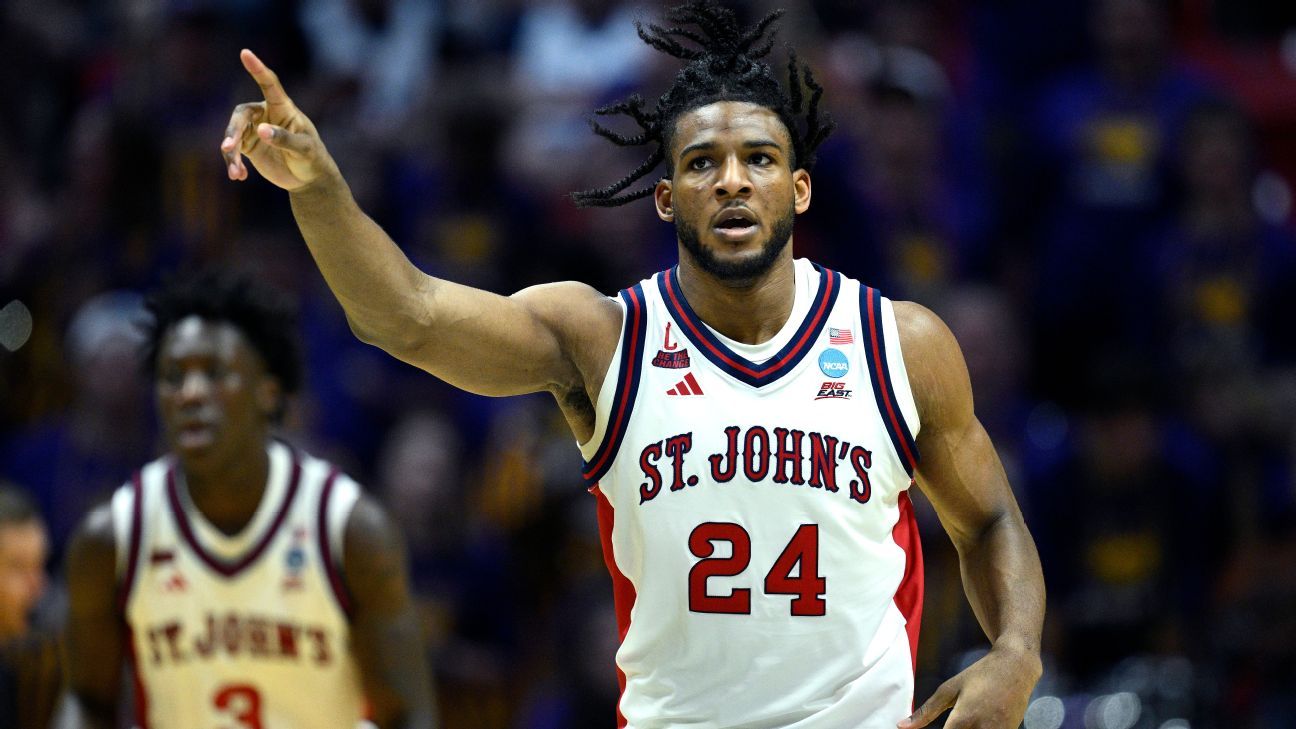
5 St. John's Red Storm
St. John's makes the Final Four if: They embrace chaos. The Johnnies can make games chaotic with their defense and force turnovers that lead to points on the other end. St. John's is not the most efficient offensive team, and it can be streaky. But what the Red Storm can do well is guard opponents and take them out of what they want to do. St. John's is confident: It has won eight games in a row and 20 of its past 21. This team will go after Duke with everything it has to force turnovers and speed the Blue Devils up.
Player to watch: Zuby Ejiofor. Bryce Hopkins had 18 points and hit six deep balls against Kansas, but Ejiofor is the engine that drives St. John's. The Kansas transfer was the Big East player of the year, the Big East defensive player of the year and the Big East scholar athlete of the year. He can hit a perimeter shot, but he does his best work in the paint, where he shoots 59% from 2-point range and gets to the foul line with frequency.
Area of concern: While St. John's brings its best against the best teams, the Johnnies can have some perimeter shooting droughts and give up offensive rebounding opportunities to opponents. With Duke's length and size, St. John's will have to double down on rebounding and send all five guys to the defensive glass.

3 Michigan State Spartans
Michigan State makes the Final Four if: The Spartans continue to defend, rebound and run the floor at a high level. Michigan State has improved throughout the season, and with great experience and togetherness, the Spartans are Tom Izzo's 17th Sweet 16 team. Michigan State is a top defensive team that limits second-chance opportunities for its opponents while generating second chances of its own by pounding the offensive glass. Over the past month or so, Izzo is getting great contributions from Trey Fort, Jordan Scott and Kur Teng, and Carson Cooper has played the best basketball of his career. Remember, Michigan State played Duke in a tight one in early December. The Spartans could very well get another shot at the Blue Devils in the Elite Eight.
Player to watch: Jeremy Fears Jr. Few point guards in the country have improved as much over the past two years as Fears, who led the nation in assists per game this season. He is outstanding in transition and set a Michigan State record with 16 assists in the second round against Louisville. When Fears connects with Coen Carr -- who was truly outstanding against Louisville, with 21 points, 10 rebounds and 2 blocks -- it is stunning.
Area of concern: Turnovers. The Spartans had 15 turnovers against Louisville, which is too many. Some of them are unforced, which can't happen when you rebound as well as Michigan State -- you need to get a shot every time down. The glass is a great insurance policy for the Spartans.

2 UConn Huskies
UConn makes the Final Four if: The Huskies can get healthy and take better care of the ball. UConn still runs a beautiful offense and is hard to guard; among its 31 wins are victories over Sweet 16 participants Illinois, Texas and St. John's. The Huskies can turn the ball over a bit too much, but overall this is still an efficient offensive team -- and its defense is actually its best attribute.
Player to watch: Tarris Reed Jr. The Michigan transfer has had an All-America season, leading UConn in scoring, rebounding, offensive rebounding, blocked shots and field goal percentage. Reed had 27 rebounds in the first round and 40 total in UConn's first two games of the NCAA tournament.
Area of concern: UConn is very good at 31-5, but this is not a dominant team. The Huskies do not get to the foul line as often as their opponents; they have been outscored at the free throw line by more than 100 points. And without a healthy Silas Demary Jr., who leads the Huskies in assists, steals and free throw attempts, UConn is vulnerable against Michigan State.
South Region

9 Iowa Hawkeyes
Iowa makes the Final Four if: The Hawkeyes shoot it well from deep, force opponent miscues and control tempo. Iowa is physical, mentally tough and can stretch the floor with timely shooting and smart cutting. This is a rhythm-disrupting team playing at one of the slowest tempos in the country. Even after losing seven of its last nine games prior to the NCAA tournament, Iowa beat Clemson and Florida to be the most unlikely of the Sweet 16 participants.
Player to watch: Bennett Stirtz. The Liberty, Missouri, product started his career at Division II Northwest Missouri State before following coach Ben McCollum to Drake, where Stirtz was the Missouri Valley Conference player of the year. In his lone season at Iowa, Stirtz was first-team All-Big Ten and one of the top scorers and shooters in the league. If choosing one player to hit a last-second shot, I would take Stirtz. Clearly, as he showed against Florida with an assist on the winning shot, he can make a game-deciding decision and play.
Area of concern: Iowa does not have a ton of size or rim protection, which makes the win over Florida even more impressive. This team can be challenged in the paint and at the rim. But while Iowa has lost 12 times, the Hawkeyes have been in every game, with the exception of an early-season defeat at Michigan State. An interesting stat: Iowa's leading rebounder averages only 4.7 boards per game.

4 Nebraska Cornhuskers
Nebraska makes the Final Four if: The Cornhuskers continue to keep teams off balance defensively. Nebraska is not a big team, but this is a gritty group that gets its noses dirty and fights. Fred Hoiberg will throw a 1-3-1 zone against opponents, and the Huskers are a great passing and cutting team that can really hit shots from multiple spots and get defenses chasing its players. Nebraska also doesn't foul much, forcing opponents to make challenged shots, which will make rebounding crucial.
Player to watch: Rienk Mast. The Huskers big man is one of the best frontcourt passers in the country, and Nebraska runs offense through him. He can score. He can rebound at a high level. And he is a great passer. Mast can exploit Nebraska's smart cutting, and Pryce Sandfort is often a beneficiary to get catch-and-shoot 3s. Sandfort has hit 123 treys on the season at a 41% clip. If you are closing out to Sandfort, you have made a defensive mistake.
Area of concern: To win, Nebraska needs to stretch defenses by making perimeter shots. When the Huskers shoot 5-of-24 from deep -- which has happened a few times -- it will be tough to beat quality Sweet 16 teams. But when Nebraska is hitting shots, this team is Final Four good, and its defense is underrated.

3 Illinois Fighting Illini
Illinois makes the Final Four if: The Illini defend at a high level. This is as potent an offensive team as there is in the field, with six players recording 35 or more 3s on the season. And when Illinois brings it on the defensive end, it is really hard to beat. No team in this tournament runs a better or more beautiful offense than Illinois, and the Illini are an outstanding offensive rebounding team. Illinois has lost only five games since mid-December, four of them in overtime. There should be no surprise that Illinois is here.
Player to watch: Keaton Wagler. The freshman point guard conjures up images of Tyrese Haliburton when he was at Iowa State. Wagler was a virtual unknown coming out of high school, only to score 46 points in a game earlier this season. He has great size, skill and feel for a point guard, and it is impossible to speed him up. He plays at his own pace and makes great decisions.
Area of concern: The only "concern" with Illinois is coming up against an athletic, grinding, lengthy defense like Houston's. But what team wouldn't be concerned about that? Illinois is an underrated No. 3 seed worthy of a 2-seed. The game against Houston will be a heavyweight fight, especially on the backboards.

2 Houston Cougars
Houston makes the Final Four if: The Cougars keep first things first, meaning pressure defense and rebounding. When Houston brings the heat defensively, that becomes the Cougars' tempo and the opponent is on its heels off extended catches and gasping for air. You cannot run a clean offense against Houston; you have to make unscripted plays under pressure. Clearly, with Kingston Flemings, Emanuel Sharp and Milos Uzan, the Cougars can generate offense. When Houston is at its best, it's because it is dictating the action on the defensive end. Period.
Player to watch: Flemings. The freshman guard from San Antonio is from a hoop family and has incredible game. Flemings put up 42 points on Texas Tech in Lubbock, and he has been very consistent all season. With a great middle game and the ability to rise up and finish over size, Flemings is capable of getting 30 in any given game.
Area of concern: Only minor ones; this is a team that went 30-6 and reached the Big 12 tournament final. Despite terrific length and athleticism up front, the Cougars don't get a ton of consistent scoring from their big guys. Joseph Tugler is one of one on the defensive end, and Chris Cenac Jr. is a future lottery pick. But to win it all, Houston needs to stay out of foul trouble and control the glass.
Midwest Region

1 Michigan Wolverines
Michigan makes the Final Four if: The Wolverines play beyond the initial action of each offensive possession. On the rare occasions that Michigan has lost, it has been at least in part because the Wolverines settle for a bad shot after the first action. When Michigan stresses the defense with multiple actions, it can beat anyone, anywhere. Remember, Michigan is the first team since Bob Knight's undefeated 1976 Indiana title team to win every Big Ten road game.
Player to watch: Yaxel Lendeborg. Last season, there were two players in the country who led their teams in scoring, rebounding, assists, steals and blocks. One was Duke's Cooper Flagg; the other was UAB's Lendeborg. Lendeborg is even better at Michigan, showing his versatility and strength around teammates who are playing far better in Ann Arbor than they did at prior stops. Aday Mara did not make much of an impact at UCLA. Morez Johnson Jr. was not a starter at Illinois before being injured. Elliot Cadeau was heavily criticized at North Carolina before changing shades of blue. Lendeborg is the best player in a great bunch -- and one of the five best players in America.
Area of concern: Depth at the point. When L.J. Cason went down with a right ACL injury, the Wolverines lost one of the Big Ten's best reserves and one of Michigan's most important players. Cason could spell Elliot Cadeau and bring a different dimension. Now, when Cadeau picks up fouls or needs a reset, Michigan has to adjust responsibilities. The Wolverines can still win it all, but the margin is slimmer without Cason.

4 Alabama Crimson Tide
Alabama makes the Final Four if: The Tide shoot the ball as well as they did against Texas Tech in the round of 32. They made 11 3-point shots in the first half against the Red Raiders and hit 19 deep balls before subbing out the regulars with a 30-point lead. Alabama leads the nation in pace, and that can wear a foe down and make it start chasing the Tide around. Alabama also is a low turnover team, in part because its players come down and launch a shot before they have time to turn it over. Alabama's offense led the SEC in scoring at 91 points per game while averaging 12.8 made 3-pointers.
Player to watch: Labaron Philon Jr. He is one of the best guards in the country, leading Alabama in scoring, assists, steals and 3-point shooting. He averages 22 points per game and tops the Tide in free throw attempts. Even against Texas Tech, with Philon not shooting well, he had 11 assists.
Area of concern: Alabama can score with anyone, and this is one of the most entertaining teams in the country to watch. But in order to reach Indianapolis for the Final Four, Alabama needs to defend and rebound at a higher level. Alabama was a middle-of-the-pack defensive team in the SEC.

6 Tennessee Volunteers
Tennessee makes the Final Four if: The Vols make good decisions with the ball. Tennessee should have a better record; as good as this team has been, it was in position to win more games with better late-game decision-making. The end of the game against Virginia was evidence of this point. Tennessee won, but the Vols made it interesting with some late decisions and miscommunications. Still, the Vols are the top offensive rebounding team in the country, hauling in close to 45% of its own misses. Talk about a great insurance policy.
Player to watch: Nate Ament. Belmont and Maryland transfer Ja'Kobi Gillespie is the Vols' most important player, but Ament is their best and most talented player. Just a freshman, Ament is long and athletic with great skill. Opposing teams have tried to be physical with Ament and bully him, and he has handled it well. He averages 17 points per game and has scored over 20 points 11 times.
Area of concern: Turnovers. The Vols turn the ball over at a 17% rate, ranking in the bottom third of Division I. Truly, their 24 wins this season would be closer to 30 if the Vols took better care of the ball and made better decisions. Iowa State will test the Vols' decision-making and ball security with pressure. If the Vols manage it, there are good things available.

2 Iowa State Cyclones
Iowa State makes the Final Four if: The Cyclones dictate the action on the defensive end -- and if Joshua Jefferson is healthy. Iowa State applies pressure at every position on the floor, extending the opponent's offense and forcing turnovers and quick shots. The Cyclones then score off those turnovers and poor shots. Iowa State made Kentucky cough it up 20 times in the second round and had a plus-13 turnover margin. Jefferson, meanwhile, made a great case for Big 12 player of the year, and he is one of the most versatile frontcourt players in the nation. Iowa State needs him on the floor to win it all.
Player to watch: Milan Momcilovic. He is the nation's best shooter and hits almost 50% from deep and at great volume. He has drained more than 130 3-pointers this season and has one of the most accurate turnaround fadeaway jumpers there is. Tamin Lipsey is one of the best defenders and leaders in the country, and freshman Killyan Toure provides length and athleticism at the point of attack. But Momcilovic is one of one.
Area of concern: Iowa State has impeccable credentials; there are few areas in which the Cyclones are not very good to elite. One of them, though, is free throw shooting. The Cyclones shoot 68% from the foul line as a team, which ranks in the bottom 20% of Division I. Can Iowa State overcome that? Yes. But can such a thing bite a team in a close game down the stretch? Also yes.
West Region

1 Arizona Wildcats
Arizona makes the Final Four if: The Wildcats continue to play inside out and pound the ball into the paint. Arizona ranks in the top five in offensive and defensive efficiency, and it can control the paint at both ends. While Brayden Burries and Anthony Dell'Orso are good shooters, Arizona does not rely upon the 3-point shot like most other teams in the tournament. The Wildcats look to get downhill and put pressure on the rim, get the ball inside from high-low looks and pound the offensive glass for second-chance opportunities.
Player to watch: Jaden Bradley. The Alabama transfer and Big 12 player of the year is among the best leaders in college basketball. Bradley doesn't lead Arizona in scoring -- the freshman Burries does -- but Bradley leads Arizona in clutch time, during which he averages 36 points per 40 minutes this season.
Area of concern: Arizona is 33-2, losing only at Kansas and at home to a JT Toppin- led Texas Tech team during an overtime game in which Wildcats forward Koa Peat was injured. Arizona is not invincible, but this is a team without any real weaknesses. To beat Arizona, you will have to play very, very well. Iowa State played Arizona about as well as any opponent can in the Big 12 tournament semifinal -- but Bradley made a play to win it at the end.
4 Arkansas Razorbacks
Arkansas makes the Final Four if: The Razorbacks keep pressure on opponents with Darius Acuff Jr. and Meleek Thomas making shots and Billy Richmond III attacking in transition. Arkansas is dynamic, and the Razorbacks are confident beyond words. John Calipari has belief in his young guards, and even with only seven guys in the rotation, this team can ball out. Two key performers have been Trevon Brazile, with his timely 3-point shooting, lob catching and shot blocking, and Malique Ewin, the Florida State transfer, with his offensive rebounding.
Player to watch: Acuff. The best scorer in the tournament, Acuff is an absolute bucket. Strong, dynamic and versatile, Acuff can score on or off the ball, and he is the first player to lead the SEC in scoring and assists since Pete Maravich. Acuff put up 36 points against High Point in the second round -- and that wasn't his best output of the season. He had 49 points against Alabama and multiple 30-point games.
Area of concern: Depth. Acuff has been playing hobbled with an ankle injury, and Karter Knox is out for the season. If Arkansas gets in foul trouble or has another injury, things could get dicey.

11 Texas Longhorns
Texas makes the Final Four if: The Longhorns keep big man Matas Vokietaitis out of foul trouble and on the floor. Vokietaitis, who had 17 points and nine rebounds while defending Gonzaga's Graham Ike in the round of 32, is a presence for Texas on both ends, and he needs to be on the court for the Longhorns to win. He can finish around the basket, get to the foul line and protect the lane. Texas has played very well, and it's a great story. For the story to continue, the Longhorns need to get even better this week in practice. With the talented Dailyn Swain, Tramon Mark and Jordan Pope, the Longhorns have a legit chance against Purdue.
Player to watch: Swain. The Xavier transfer had a great campaign in Austin, garnering second-team All-SEC honors. Swain has positional size and the ability to get downhill, and he gets to the foul line. If he is aggressive and engaged, he can be the difference.
Area of concern: Texas is playing terrific basketball, and I loved their draw from the moment the bracket came out. But the Longhorns beat an erratic NC State team, a short-handed BYU team and a short-handed Gonzaga team. The key against Purdue will be the defense. Can Texas get stops versus a precise Purdue team with experience? Texas will not outscore Purdue on offense. The Longhorns have to get stops and defensive rebounds to win.

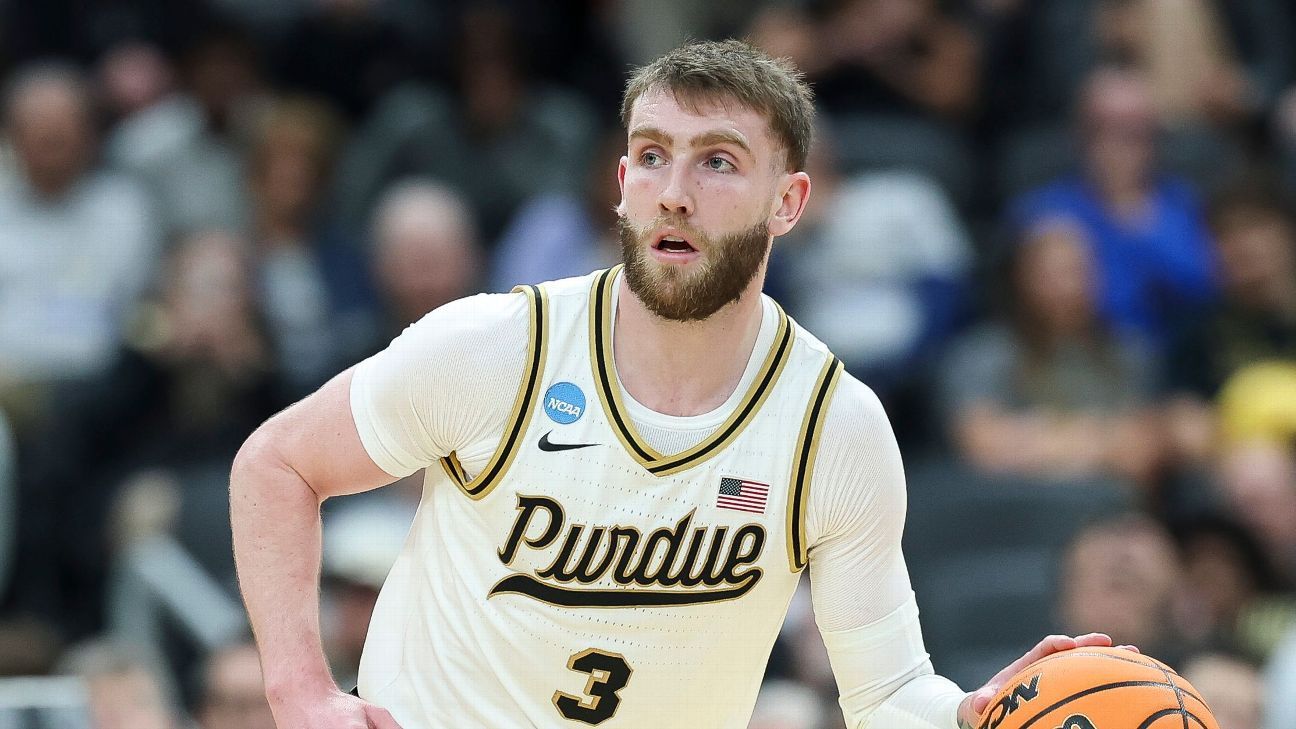
2 Purdue Boilermakers
Purdue makes the Final Four if: The Boilermakers guard the ball, stay out of rotation and limit opponents to one -- challenged -- shot. Purdue is not the most athletic team and does not have significant rim protection. Staying in front, keeping in gaps, showing bodies and gang rebounding make Purdue a Final Four team. The first half against Miami relative to the second half shows the difference in Purdue's defense: When the D is broken down off the bounce, opponents can attack the rim and the offensive glass.
Player to watch: Trey Kaufman-Renn. While Braden Smith is the best point guard in the country and Purdue's top player, Kaufman-Renn is Purdue's bellwether. He has magnificent footwork and a midrange push shot that would make the Oklahoma City Thunder's Isaiah Hartenstein drool. When Kaufman-Renn operates with Smith in the screen and roll, especially in the short roll, it is magic.
Area of concern: Purdue can turn it over against pressure, and we saw some of that against Miami in the second round. Against Texas, Purdue will not see pressure more intense than the Hurricanes can bring; but Purdue's ability to combat pressure from Arkansas or Arizona in the round that follows will determine whether the Boilermakers get to Indy.